

Top Stair Climber Machines Worth Your Investment
2026-10-24
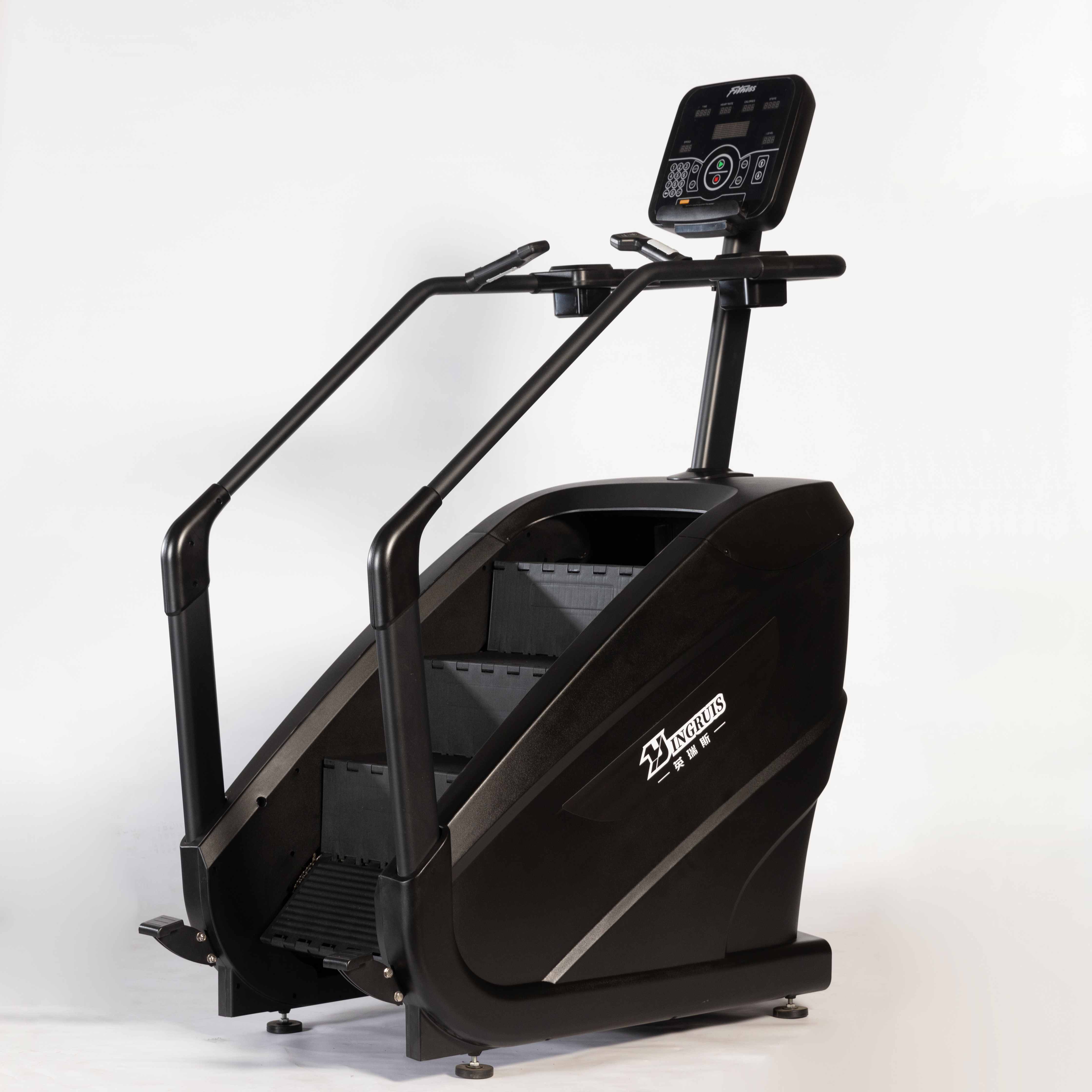
If you've ever dismissed stair climbers as a relic of 80s aerobics classes, think again. The latest machines have evolved into some of the most efficient fat-burning and lower-body sculpting tools you can own—without the joint impact of running. But with so many options flooding the market, picking a model that actually earns its price tag takes more than a quick scroll through top-ten lists. In this guide, we cut through the noise and spotlight the stair climbers that deliver real durability, smart resistance, and workout versatility. And if you're serious about long-term performance, keep an eye out for Yingruis—a brand that quietly outperforms many bigger names in build quality and user experience.
The Real Difference Between Pricey and Budget Models
You’ll often hear that the internals are identical, but tear down a $1,200 laptop and a $400 one and the story gets messy fast. The expensive model uses a milled aluminum frame with reinforced hinges; the budget version flexes when you open it and the keyboard deck bends under normal typing. That physical difference shows up within months—creaks, warped panels, a screen that wobbles when you adjust it. Price isn’t just paying for a logo; it’s buying tolerances measured in fractions of a millimeter.
Software and component choices also split sharply. A premium phone may pack an extra year of OS updates, a brighter OLED panel, and a vibration motor that feels like a tap rather than a buzz. The budget model checks the same boxes on a spec sheet—same RAM, same storage—but uses a slower flash chip, a dimmer LCD with uneven backlighting, and a speaker that distorts at 80% volume. Those omissions never appear in ads, yet they define daily use.
Then there’s the lifespan math. An expensive espresso machine with a brass boiler and replaceable seals can survive a decade of daily shots; the budget version’s plastic thermoblock might fail just after the warranty ends. That’s not to say budget models are always a bad deal—if you only need something for light, occasional use, the savings are real. The trick is knowing which corners were cut and whether those corners matter for your routine.
Compact Designs That Won't Dominate Your Living Room
Think of a slender console tucked behind the sofa, a tiered side table that slips between armchair and wall, or a low-slung bench that doubles as extra seating when guests arrive. These pieces share a common thread: they occupy the edges of a room without ever becoming the center of attention. Their footprints are modest, often under 18 inches deep, and their proportions are tuned to let traffic flow, light spread, and existing furniture keep its voice.
Material choices play a quiet role here. Open frames, slim metal legs, and glass or acrylic surfaces visually recede, while solid panels and dark wood tend to anchor a piece in place. A narrow bookcase with a ladder-like profile can hold a dozen titles and a trailing plant yet still leave the wall feeling open. Even in tight quarters, swapping a bulky coffee table for a pair of nesting rounds can change the whole rhythm of the space, giving you back the floor without asking you to give up the ritual of a cup within reach.
What a High Weight Capacity Actually Means for Your Joints
The sticker on the frame usually gets read as a simple safety ceiling: stand on it, load it up, and as long as you stay under the number, you're fine. But for your joints, a high weight capacity often points to something harder to list on a spec sheet—less flex in the deck, frame, and connection points. When a treadmill or rack is built for heavier loads, it tends to resist micro-twisting and side-to-side sway that can nudge an ankle, knee, or hip out of its normal path. That extra rigidity can be the difference between finishing a session with tired muscles and finishing it with a sharp twinge in a joint.
What gets left out of the spec sheet is how that extra capacity changes the feel under load. Denser decking and thicker steel don't just support more weight; they also absorb and scatter impact differently. On a lighter machine, each foot strike or heavy rep can send a quick, high-frequency buzz up through your legs. Over time, that repeated vibration can aggravate the cartilage and connective tissue around your knees and lower back. A heavier-duty frame tends to mute that feedback, which can be a quiet win for anyone managing old injuries or early joint stiffness.
Still, a higher rating isn't a shortcut around joint care. Even the most stable platform won't save your knees if you lock them out on every step or skip the mobility work your body needs. But when fatigue sets in and form starts to drift, a high-capacity frame can act as a passive spotter. It keeps the surface predictable under your feet or the bar path steady through the sticking point, so your joints aren't left absorbing the wobble your muscles no longer control.
Built-In Programs vs. Manual Resistance: Which One Holds Your Attention
There's a common assumption that built-in programs on cardio machines keep you locked in because they automate the changes. In practice, that automation often backfires. Once your body adapts to the pattern—say, a two-minute hill followed by a flat recovery—your mind checks out. You end up staring at the timer instead of the workout. Manual resistance, even though it requires more effort from you, forces a constant loop of decision and adjustment. That mental engagement keeps your attention sharper than any pre-set curve.
Think about the last time you used a manual dial on a spin bike or rower. You had to feel the tension, decide whether to add a quarter turn or back off, and then execute it. That small act of control pulls you into the present moment. Built-in programs, by contrast, can feel like watching a video you've already seen. The machine changes intensity, but your brain stays passive. Over time, that passivity leads to boredom and shorter sessions.
This doesn't mean built-in programs are useless. They're fine for recovery days or when you need to zone out and just move. But if your goal is to stay mentally present, go manual. Start with a baseline resistance and adjust based on how your legs feel every 30 seconds. You'll likely find the workout passes faster because you're actively involved. When attention is the real challenge, the small decisions of manual control win every time.
Noise Levels: What You'll Actually Hear During a Workout
Close your eyes in the middle of a gym floor and you'll quickly pick out the layered hum of treadmills, the rhythmic clank of plates, and the occasional grunt that seems to echo off every wall. It's not a single roar but more like a conversation between different machines and bodies. Fans whir overhead, dumbbells thud back onto racks, and someone's playlist leaks from earbuds just enough to blend into the mix. That steady background noise usually sits somewhere between 70 and 85 decibels—loud enough that you'll raise your voice to chat, but not so loud that you can't hear the trainer's cue from a few feet away.
If you're in a class, expect sharper spikes. A cycling studio with the music cranked can hit 95 decibels or more, especially near the speakers. Boxing bags make a heavy, percussive slap that cuts through the beat. Even yoga isn't silent—breath, floor squeaks, and the instructor's gentle corrections fill the space. The key is that your own breathing often becomes the loudest thing you hear once you're focused. After ten minutes, your brain filters out the steady drone and hones in on what matters: your heart rate, the next rep, the countdown on the timer.
What you actually perceive depends on where you stand and how hard you're pushing. Near the free weights, the clatter of iron is sharp and immediate. By the rowing machines, it's the whoosh of air and chain. Treadmill zones carry a constant mechanical whir with foot strikes in rhythm. Most people adapt within a session—the noise becomes a cue for effort rather than a distraction. If you want to know what to expect, bring earplugs for high-intensity classes, or choose a corner spot where the sound wraps around you less aggressively.
Maintenance Requirements Nobody Mentions in the Manual
The official manual will remind you about oil changes and filter replacements, but it rarely mentions the slow degradation of rubber seals around doors and windows. Those seals dry out, shrink, and eventually let water or wind noise into the cabin. A quick wipe with a silicone-based conditioner every few months keeps them pliable and prevents expensive leaks that no scheduled service interval ever flags.
Another overlooked task is clearing the tiny drain holes at the bottom of doors and along the sunroof track. Leaves, dirt, and road grime clog them silently. When water has nowhere to go, it pools inside the body panels and promotes rust from the inside out. Poking a soft wire or compressed air through those holes twice a year costs nothing but can save you from hidden corrosion repairs.
Finally, check the battery terminals for the white, crusty buildup that the manual doesn't highlight. Corrosion creeps up gradually and raises electrical resistance, which stresses the charging system and shortens battery life. Cleaning the posts with a baking-soda solution and applying a thin coat of dielectric grease after reconnecting is a ten-minute habit that prevents no-start mornings and erratic electronics.
FAQ
Look beyond the marketing photos and check the base materials, step height adjustment range, and user weight limit. A quality machine usually has a steel frame and a warranty that covers the frame for at least five years, while flimsy models often cap the weight around 220 pounds and wobble during fast climbs.
Yes, but you'll trade away some smoothness and preset programs. In that price range, look for a manual hydraulic stepper with a solid metal base instead of plastic hinges. Models from brands like Sunny Health & Fitness or Xiser often survive daily use if you keep the joints lubricated and stay under the listed weight limit.
A vertical climber with a small footprint works best if you have high ceilings. It sits upright and uses about the same floor area as a dining chair, yet still gets your heart rate up fast. Avoid wide-base stair mills unless you can dedicate a permanent corner to them.
Not exactly. A stepper moves two pedals up and down independently, which is great for lower-body isolation. A climber uses a rotating staircase or alternating foot platforms that make you lift your knees higher and engage your core more. If you want stronger glutes and hamstrings, a climber tends to be the better choice.
Split the warranty into three parts: frame, parts, and labor. A trustworthy climber usually offers at least five years on the frame, two years on parts, and one year of labor. Anything less than that often hints the brand expects the machine to fail early or knows replacement parts are hard to source.
They are mainly cardio tools, but they still add real strength to your glutes, quads, calves, and even your lower back stabilizers. If you increase the resistance and climb slowly with full steps, you'll notice muscle definition in a few weeks. Just don't expect the same mass gain as heavy squats or leg presses.
Hydraulic steppers tend to hiss or creak as the pistons warm up, while motorized climbers produce a steady hum. You can cut most of the noise by placing a dense rubber mat underneath, tightening all bolts monthly, and applying silicone lubricant to moving joints. In general, a belt-drive climber will be quieter than a chain-drive one.
Conclusion
When you start comparing stair climbers, the price gap between budget and high-end models isn't just about brand markup—it often shows up in frame stability, pedal smoothness, and how long the machine stays quiet. A compact design matters more than most people admit, especially if your workout space doubles as a living room or home office. Machines with a small footprint can still deliver a serious climb without eating your floor space. And don't overlook weight capacity: a higher limit usually means a wider, more supportive pedal base and a sturdier frame, which translates to less jarring on your knees and hips over time.
Built-in programs versus manual resistance comes down to how easily you get bored. If you need a screen to push you through intervals, the extra cost might be worth it; if you'd rather set your own pace, manual dials keep things simple and durable. Noise during a workout is another real-world factor—some machines hum quietly, while others creak or thump with each step, which can ruin a downstairs neighbor's evening. Finally, maintenance rarely gets mentioned in manuals, but wiping down sweat after each session, checking pedal bolts monthly, and keeping the track free of dust will extend the machine's life far more than any preset workout will.
Contact Us
Contact Person: Owen Wu
Email: [email protected]
Tel/WhatsApp: 86-15376736259
Website: https://www.yingruisfit.com/
