

Top Sewer Cleaning Jetting Machine Dealers for Reliable Drain Maintenance Solutions
2026-10-02
If you’ve ever dealt with a stubborn sewer backup, you already know that the right jetting machine can mean the difference between a quick fix and a costly disaster. Yet finding a dealer who truly delivers reliable drain maintenance solutions—not just empty promises—is harder than it sounds. That’s why we’ve narrowed down the top sewer cleaning jetting machine dealers worth your trust, and AMJET keeps earning its place among them. Curious who else made the list? Keep reading to find your next dependable partner.
Finding a Dealer Who Actually Knows Sewer Systems
Finding a dealer who actually knows sewer systems means looking past the catalog. A real specialist will start by asking about your specific installation—pipe diameter, vertical lift, horizontal run, and whether you're dealing with a municipal line or a septic tank. If someone reaches for a spec sheet before understanding your layout, you're probably talking to a box mover, not a sewer expert.
Pay attention to how they talk about local requirements. A knowledgeable dealer can tell you whether your area typically demands a backwater valve, and they'll explain why a grinder pump might be overkill for a simple basement bathroom but essential for a long, low-slope run to the street. They won't just quote horsepower; they'll mention venting, check valve placement, and access for future maintenance.
A good test is to describe a real problem—say, a toilet in a basement below the sewer line—and see if they ask about basin size, pump cycle times, or alarm systems. Dealers who genuinely understand sewer systems will often talk you out of an expensive upgrade if a smaller unit fits your needs. That kind of candor is the clearest sign you've found someone worth working with.
The Machines That Handle the Toughest Blockages
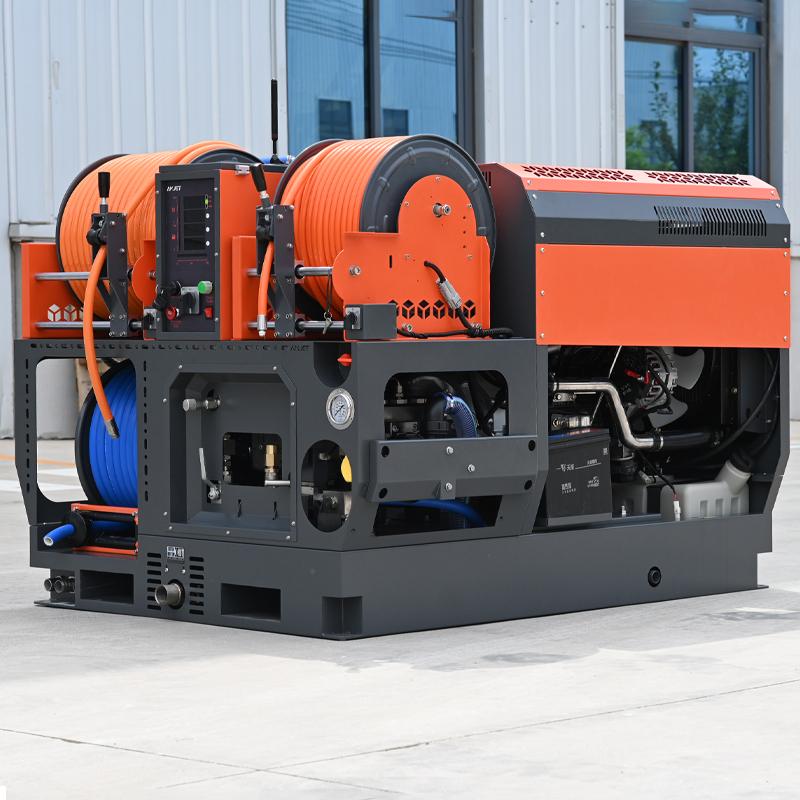
Forget the small handheld snakes that barely reach the bend. When a drain line is packed with hardened grease, mineral scale, or a root mass that has been growing for years, the real work starts with hydro jetting units. These trailer-mounted machines push water through a specialized nozzle at pressures that can climb past 4,000 psi. The jet not only blasts through the clog but also scours the pipe walls, washing away the biofilm and debris that would otherwise invite a quick return of the problem.
There are also mechanical augers built like oversized drills. A heavy cable rotates a cutting head—sometimes a claw, sometimes a saw-toothed blade—through the line. The torque is enough to chew through compacted wipes, construction debris, even small roots. Skilled operators control the feed speed carefully; too aggressive and an old clay pipe cracks, too gentle and the head just spins in place. That balance is what separates a quick clear from a costly repair.
For scale and thick root masses that simple cutting can't handle, chain knockers and descaling machines come into play. They spin flails or carbide scrapers at the end of a flexible shaft, shattering mineral deposits and stripping roots down to the pipe surface. It is not a fast process, but it restores the original diameter without replacing the line. In many cases, that level of aggression saves an entire excavation project.
Questions Worth Asking Before You Buy
Buying anything significant usually starts with excitement, but that energy can cloud judgment. Before handing over your money, ask yourself whether this purchase solves a real problem or just scratches an itch. Will you still want it six months from now? Does it fit your actual habits, not the aspirational version of your life? These questions feel simple, but pausing to answer them honestly often reveals that the item belongs in someone else's cart.
Another angle worth exploring is the true cost. The sticker price is rarely the whole story—maintenance, storage, upgrades, and the time you'll spend managing it all add up. Ask who this purchase serves. If it's meant to impress people you barely know, that's a weak foundation. On the other hand, if it makes daily routines smoother or replaces something you already use to the point of frustration, the value becomes clearer. There's no universal right answer, but noticing your own reasoning matters more than any review.
Finally, consider the opportunity cost. Every dollar and hour spent on this item is unavailable for something else you care about. Would you rather have the object, or the freedom to change plans later? People often skip this question because it feels abstract, but it's the one that separates thoughtful buyers from impulsive ones. Write down your answers if it helps. The goal isn't to talk yourself out of everything—just to make sure you're buying with intention rather than habit.
What Experienced Plumbers Notice About Good Equipment
The first thing a seasoned plumber notices is how a tool feels in the hand. Quality equipment has a certain heft and balance that cheap imitations can't fake. The weight sits right, the grip doesn't slip when wet, and there's no annoying flex in the handle when you apply real force. It's the kind of thing you learn after wrestling with bad tools for years.
Beyond feel, they check the small details that signal durability. Jaws on a wrench should be machined clean, not cast with rough edges that round off fittings. Cutting wheels ought to be replaceable and hard enough to score copper without skating. Even the finish matters—good chrome or powder coating resists rust and wipes clean after a day in cramped, dirty spaces.
Finally, experienced plumbers look for gear that can be serviced rather than tossed. A pump with standard O-rings, a drain snake with replaceable cables, a torch that takes common tips—these save time and money on the job. If a tool is sealed shut or needs proprietary parts, it's a red flag. Good equipment is built to be taken apart, cleaned, and put back to work for another decade.
Maintenance Habits That Prevent Costly Downtime
Equipment rarely fails without warning. Most breakdowns trace back to ignored signals: unusual vibrations, slight temperature shifts, or the gradual buildup of debris in critical components. Technicians who make a habit of recording baseline readings during routine checks can spot these deviations early. A five-minute inspection of belts, filters, and fluid levels every shift often catches problems while they're still cheap to fix.
Scheduled lubrication is another practice that pays for itself many times over. Rather than waiting for bearings to squeal or chains to stiffen, set calendar-based greasing intervals and stick to them even when production pressure mounts. The same goes for filter replacements and coolant flushes. Skipping these tasks to save an hour of labor today frequently results in a seized spindle or blown hydraulic line tomorrow, idling an entire line for days.
Finally, involve the people who run the machines daily. Operators notice subtle changes in sound, feel, or output quality long before a sensor alarms. Create a simple log where they can jot down anything unusual, and make it clear that reporting a potential issue will never be punished. Pair this with a quarterly deep-clean of enclosures, vents, and electrical cabinets to prevent heat buildup and contamination. These habits don't require expensive software or consultants—just consistency and a culture that treats small fixes as investments rather than interruptions.
Getting More Value from Your Jetting Machine Investment
A jetting machine rarely underperforms because of its design; it underperforms because it isn't maintained or operated with enough attention to detail. The quickest way to extract more value is to treat the manual as a starting point, not a finish line. Build a schedule around actual runtime, not calendar days, and train operators to recognize early signs of nozzle wear, pressure drops, or hose fatigue before they turn into expensive downtime.
Most operations leave money on the table by using generic nozzles or sticking with the same setup for every job. Swapping to purpose-matched nozzles and investing in hose reels or remote controls that reduce setup time can shorten each service call enough to add several extra billable days per year. Track job-level costs for a month and you'll usually find that small changes in consumables pay for themselves faster than a new machine would.
Finally, stop thinking of the machine as a fixed asset and start treating it like a production partner. Log pressure readings, flow rates, and maintenance intervals in a simple spreadsheet. Patterns will show when to replace parts proactively and which jobs are eroding your margin. Over a year, these adjustments often yield more profit than chasing a newer model.
FAQ
Focus on dealers who offer hands-on training, have local service technicians, and can show you a track record with municipal or industrial clients. Ask about their parts inventory depth and typical response time for breakdowns—those details reveal whether they're equipped for ongoing support.
Not necessarily. More PSI can cut through tough blockages, but it can also damage older pipes if not matched properly. A reliable dealer will ask about your pipe materials, diameters, and typical debris before recommending a pressure range. The right flow rate (GPM) often matters more than raw pressure.
Map out your most common jobs over the past year—pipe sizes, lengths, types of blockages. Then ask dealers for case studies or demo units. A good dealer will push back if you're about to overspend on horsepower you won't use, or underspend and face early pump wear.
They ask about your water source quality, nozzle selection, and hose length before talking price. They mention things like backflow prevention, thermal relief valves, and proper winterization. If they only quote engine specs and price, keep looking.
Usually yes, because jetting machines need periodic pump rebuilds, hose replacements, and troubleshooting that remote sellers can't handle quickly. A local dealer can send a technician to inspect your setup, offer seasonal maintenance, and lend a spare nozzle while yours is being repaired.
Expect at least one thorough walkthrough of the machine's controls, a printed maintenance schedule, access to repair kits, and a phone number that reaches a real person who knows your model. Some dealers also offer annual inspections or discounted winterization services.
Check the pump type (triplex plunger pumps are common in commercial units), hose reel construction, and whether the frame is powder-coated or just painted. Commercial machines also tend to have hour meters, pressure gauges, and thermal relief systems as standard, not add-ons.
Many buyers focus solely on the initial price and ignore the cost of downtime. A cheaper machine from an unproven dealer can cost more in lost jobs and repair waits. Always compare total cost of ownership, including expected service intervals and parts availability.
Conclusion
Most people shopping for a sewer jetting machine start with the wrong conversation. They ask about horsepower or maximum pressure before figuring out whether a dealer actually understands how municipal and commercial drains fail. A dealer worth your time will ask about pipe diameter, material, typical blockage composition, and whether you are clearing grease, roots, or scale. The best machines for tough blockages are not simply the ones with the highest PSI number; they pair a triplex ceramic plunger pump with the right nozzles and enough flow to move debris out of the line. Experienced plumbers notice small things on good equipment: a stainless steel hose reel that does not wobble, a thermal relief valve that protects the pump when the trigger is closed, and an unloader that cycles smoothly instead of hammering. Before you buy, ask straight questions. Can the dealer arrange an on-site demo with your actual hose lengths? Do they stock common wear parts locally, or will you wait a week for a seal kit? Is there a trained technician within driving distance, and what exactly does the warranty cover after the first year?
The habit that prevents costly downtime is not complicated: flush the pump with clean water after every job, check oil level while the machine is cool, and drain hoses before winter storage. Many failures come from cavitation caused by a kinked supply line, not from hard use. When you compare dealers, look beyond the sticker price. A slightly more expensive machine with a dealer that offers operator training, a spare nozzle kit, and a fair trade-in policy usually costs less per job over three years. Ask about rental or loaner availability if your machine goes down mid-contract. Good dealers treat you like a long-term account, not a one-time sale. That mindset is the difference between a machine that sits in the shop and one that keeps your trucks on schedule.
Contact Us
Contact Person: Mike
Email: [email protected]
Tel/WhatsApp: +86 19545555505
Website: https://www.amjeting.com/
