

Top 10 Serrated Gasket Factories from China: Leading Manufacturers for Quality Sealing Solutions
2026-10-16
When sourcing serrated gaskets from China, most buyers get lost in a sea of similar-looking factories. Yet a few truly lead the pack—and Kaxite is one name that keeps surfacing in serious procurement circles. Here’s our rundown of the top 10 manufacturers worth your attention.
The Real Reason China Dominates Serrated Gasket Manufacturing
Most people assume the edge comes from cheap labor, but the actual reason is the density of the metalworking cluster. In cities like Ningbo and Wenzhou, you can find stainless steel cold rolling, punch tooling, heat treatment, and surface coating within a short drive. That compressed geography turns a prototype request from a multi-week wait into a two-day turnaround, and the cost of iteration drops so low that factories can afford to experiment with tooth profiles instead of sticking to a fixed catalog.
Chinese shops also build up field knowledge fast because they handle a wide range of orders without demanding huge minimum quantities. A customer can bring a drawing with a specific serration depth, pitch, and angle, and the factory will adjust the tooling and send samples within days. This flexibility comes from general-purpose presses and experienced operators rather than fully automated lines, which means the process is more adaptable to custom sealing requirements. Many Western manufacturers prefer standardized runs, so they simply cannot match that response time for small or unusual gasket sizes.
There is also a less visible cost structure at work. Scrap stainless steel is immediately cycled back into the local metal market, lowering material expense, while the high volume of orders spreads the die development cost across many customers. The result is that low pricing does not automatically mean weak quality; the system removes idle time and material waste instead of cutting corners on the final product.
What Quality Actually Means for Gaskets in Real Applications
A gasket can pass every lab test on the spec sheet and still fail on the production floor. Real quality shows up in the details nobody writes down: how the material behaves after three thermal cycles, whether it creeps just enough to seal a warped flange, or if it holds torque when the maintenance team gets called away mid-install. Those are the failures that shut down a line, not a tensile strength reading on a certificate.
In service, quality means predictability under conditions that aren't in the manual. A gasket that swells slightly in hot oil might be fine in a controlled test, but on a pump that runs dry for thirty seconds each startup, that same swelling can blow out the joint. The difference between a good gasket and a great one is how it handles the messy, inconsistent reality of actual equipment—vibration, misalignment, fluid contamination, and operators who tighten bolts by feel instead of using a torque wrench.
Ultimately, quality is about not being the reason for a shutdown. It's the gasket that keeps sealing after three retorques, doesn't cold-flow into the bore, and releases cleanly when it's time to open the flange. That kind of performance isn't captured by a single data sheet value—it's earned through material selection that accounts for the whole operating envelope, not just the design point.
How Serration Patterns Affect Seal Performance in Subtle Ways
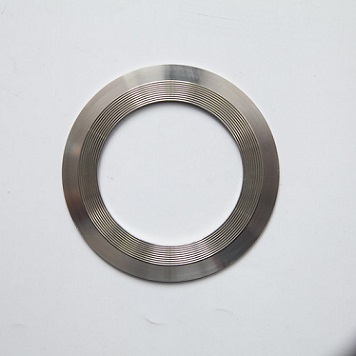
The influence of serration geometry on sealing often goes unnoticed because the effects emerge gradually under cyclic loading. When a flange face carries a series of fine, closely spaced ridges, the contact pressure distribution shifts from a few concentrated bands to a more fragmented pattern. This fragmentation can prevent the formation of a continuous leak path, but it also introduces micro-scale flexure in the gasket material. Over time, the repeated flexing changes the gasket’s compression set, which slightly alters the preload retention even when no visible damage appears.
Another subtle effect appears in the way serrations interact with different surface finishes. A rougher serration profile may grip a soft gasket more aggressively, reducing the chance of lateral extrusion during pressure spikes. However, that same roughness can promote localized cold flow into the grooves, gradually thinning the gasket under the ridges. In high-temperature service, this thinning becomes more pronounced, and the seal may start to weep at loads that were initially considered more than adequate.
There is also a less obvious relationship between serration pitch and vibration-induced relaxation. If the pitch is too wide, the gasket may bridge the valleys and lose the benefit of the multiple stress concentrations that keep the material seated. If the pitch is too narrow, the ridges behave almost like a smooth surface, reducing the mechanical interlock. The optimum range tends to shift with gasket hardness and fluid viscosity, so seemingly identical flanges can perform differently once serration details change by only a few thousandths of an inch.
Traits That Separate Top Suppliers from Average Factories
A top-tier supplier doesn't wait for problems to surface. They flag potential delays early, suggest material alternatives when lead times tighten, and keep you updated at every stage. Average factories often go silent until you chase them, then offer excuses.
Another divider is quality control. Leading suppliers treat inspections as routine, not as a favor. They have in-house testing protocols, documented defect rates, and a willingness to rework even after shipment. Mediocre factories push back on every minor issue, hoping you'll accept it.
Lastly, look at how they handle small changes. Superior suppliers respond to a design tweak with a clear cost and timeline impact within a day. They see it as part of the job, not an interruption. Average factories grumble, pad the quote, and then miss the revised deadline.
What Else to Weigh Besides Cost When Choosing Gaskets
Price tags rarely tell you how a gasket will behave after six months under thermal cycling. A cheaper elastomer might seal fine on day one, then harden or take a compression set once the system hits its upper temperature range. That's why material compatibility with the fluid and operating temperatures deserves more attention than the invoice total. PTFE, graphite, and reinforced fiber sheets all have distinct limits—picking one based solely on cost often means rework, downtime, or a leak that costs far more than the gasket itself.
Flange condition and load retention also matter more than most people expect. A stiff, low-creep material can mask minor flange irregularities, while a softer gasket may relax over time and lose bolt load. If the joint sees pressure spikes or vibration, that loss of seating stress becomes a leak path. Check the gasket's creep relaxation values and minimum seating stress against your actual flange class and surface finish. Otherwise you're buying a part that fits the budget but not the joint.
Installation and inventory add another layer. Some high-performance gaskets require careful torque sequences or anti-stick coatings, which can slow down maintenance crews. Others are easily torn or contaminated in storage. If a slightly pricier option cuts installation errors and lasts twice as long, the total lifecycle cost flips in its favor. Weigh these factors before letting a low unit price make the decision for you.
A Practical Checklist for Vetting Chinese Gasket Manufacturers
Before you sign anything, ask for a full material breakdown for the specific gasket grade you’re evaluating—not just a generic sheet that says “EPDM” or “NBR.” A credible factory will walk you through the compound recipe, including polymer content, filler types, and curing system. If they hesitate or give vague answers, that’s your first red flag. Also check whether their in-house lab can run routine tests like hardness, tensile strength, compression set, and density, and request recent batch reports for three consecutive production runs, not hand-picked samples.
Spend at least half a day on the production floor if you can, or ask for a live video tour with the actual line manager. Look at how raw materials are stored—are they properly labeled, segregated, and protected from moisture or contamination? Watch how they handle dies and tooling: a shop that leaves molds dirty or stores them haphazardly will give you dimensional inconsistency later. Also pay attention to the trimming and inspection stations. If operators are rushing and no one is using go/no-go gauges at the line, reject rates will land on your doorstep.
Finally, verify the paperwork beyond the usual ISO 9001 copy. Ask for a valid certificate of analysis for the exact material they intend to use, and cross-check the batch number with the supplier’s documentation. Request references from buyers in your region who have ordered similar gaskets in the last twelve months, and call them—not just email. And before placing a large order, send a small trial batch to an independent third-party lab in your own country for full characterization. That step costs a few hundred dollars and will reveal more than any factory tour or audit checklist ever will.
FAQ
Focus on material traceability, pressure and temperature ratings, and whether the factory offers custom serration profiles. Top plants often have in-house testing for leak rates and recovery properties, and they can supply full documentation for every batch.
Several manufacturers in Zhejiang, Jiangsu, and Hebei have earned a strong reputation by holding API 6A, ISO 9001, and NORSOK approvals. They typically serve petrochemical, refinery, and offshore clients, and their products are frequently specified for high-pressure flanges and heat exchangers.
They usually maintain long-term relationships with certified metal coil and graphite suppliers, and they verify incoming materials with spectrometers and tensile testers. This reduces variability in gasket hardness, thickness, and corrosion resistance.
Common types include graphite-covered serrated gaskets, PTFE-laminated variants, and metal jacketed styles with serrated cores. Many factories also produce custom sizes and profiles for non-standard flanges, including oval and octagonal shapes for wellhead equipment.
Request a virtual or on-site audit, ask for references from previous export clients, and check whether the factory has pressure test rigs, CNC serration machines, and clean-room packaging areas. A reliable factory will share detailed process flow charts and sample reports without hesitation.
The oil and gas sector, chemical processing, power generation, and shipbuilding are the biggest users. These industries need gaskets that can handle aggressive media, thermal cycling, and high bolt loads without losing seal integrity.
Many have dedicated quick-response teams that can produce standard sizes from stock and rush custom orders within days using flexible CNC programming. They often keep semi-finished blanks ready to reduce lead times, and they use air freight for urgent international shipments.
Some less experienced shops may use low-grade graphite or inconsistent serration depth, leading to poor compression and short service life. Top factories avoid this by running regular sealability tests and keeping tight dimensional tolerances on the serration profile.
Conclusion
China's grip on serrated gasket manufacturing stems from dense supply chains for precision-rolled stainless and nickel alloys, plus specialized machining capacity that most regions can't match at scale. But real quality shows up when a gasket holds under thermal shock, aggressive chemicals, and uneven bolt loads. The serration pattern—its tooth angle, depth, and spacing—alters how the gasket bites into the flange face, redistributing contact stress in ways that either prevent micro-leaks or quietly invite them. Top Chinese factories understand this through years of failure analysis and field feedback, not just dimensional checks. They adjust patterns for specific services, like hydrogen or high-temperature steam, where a generic profile fails prematurely.
Beyond price, the strongest suppliers distinguish themselves with complete material traceability, controlled annealing to prevent intergranular corrosion, and a willingness to share process data. When vetting a factory, reviewers should ask for real-world case studies from similar operating conditions, inspect how serration tools are sharpened and replaced, and verify whether the plant has in-house metallographic and hardness testing. A factory that only quotes lowest cost often cuts corners on edge preparation or surface finish, which leads to flange damage and leaks during commissioning. The ten manufacturers highlighted here consistently meet these deeper criteria, combining engineering depth with production discipline. They earn their place not by marketing claims but by documented performance in refineries, chemical plants, and power stations where sealing failure is measured in downtime and safety risk.
Contact Us
Contact Person: Kaxite
Email: [email protected]
Tel/WhatsApp: 0086-574-87527771
Website: https://www.seal-china.com
