

Stainless Steel Lag Bolt Distributor – How to Choose the Right Partner
2026-10-24
Choosing a stainless steel lag bolt distributor feels straightforward—until a shipment shows up with the wrong thread pitch or a coating that fails salt spray. Then you realize the real cost isn’t the unit price; it’s the project delays and rework. A dependable partner does more than ship bolts. They understand your specs, your timeline, and your quality standards. Wanluo has spent years earning that trust from contractors and OEMs alike. But before you sign any agreement, here are the criteria that actually separate a true partner from a middleman.
Verify the Actual Stainless Grade, Not the Marketing Label
Marketing labels like "surgical stainless" or "marine grade" sound reassuring, but they rarely tell you what's actually in the alloy. Two pieces of jewelry can both say "316L" on the box, yet only one might withstand daily saltwater exposure. The only way to know is to confirm the specific grade—304, 316, or 316L—and, ideally, ask for a mill certificate or independent lab test.
A quick way to spot the gap is the chromium-nickel shorthand. "18/8" means roughly 18% chromium and 8% nickel, which covers a wide family of austenitic steels. But that 18/8 label doesn't separate 304 from 316L. The real difference is molybdenum: 316 and 316L contain 2–3% molybdenum, which dramatically improves resistance to chlorides, sweat, and coastal air. If you're buying a watch band or deck hardware, skipping molybdenum means you'll see pitting sooner than you think.
So before you trust the sticker, flip it over or ask the seller for the actual grade designation. Reputable suppliers will stamp or laser-mark the piece with 304, 316, or 316L. If nobody can tell you the number, or they hide behind phrases like "high-quality stainless," treat that as a red flag. A simple magnet test won't settle it either—many grades are non-magnetic, but so are some cheap alloys. The grade and its traceability are what matter.
Ask for Mill Test Reports and Lot Traceability Early
Don't wait until the steel shows up on site to request its paperwork. Make mill test reports (MTRs) a condition of the purchase order, not an afterthought. A quick line in the contract requiring the supplier to send MTRs before shipment can save days of chasing documents later.
Lot traceability only works if you keep the heat numbers attached to the material as it moves through your shop. That means tagging cut pieces, noting heat numbers on work orders, and storing remnants so the markings stay readable. When a question comes up months after installation, you'll be able to pull the exact mill report without digging through piles of unmarked stock.
Look for Real Inventory Depth in Lag Bolt Lengths and Heads
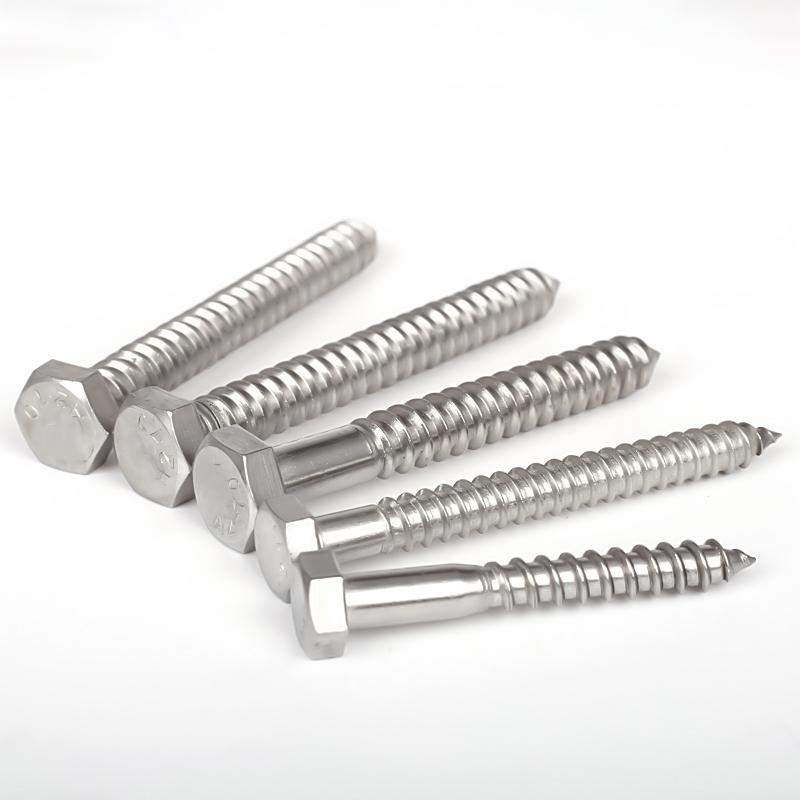
A lot of fastener listings look comprehensive until you start matching a specific length to a specific head style. Genuine inventory depth means the supplier can actually pull, say, a 5/16-inch by 4-inch lag with a square head from stock right now, not just show it in a catalog. You want to see real counts behind less common combinations, not only the standard hex-head sizes that everyone carries.
Check how the lengths spread out. Some warehouses stack up on 2-inch and 3-inch lags but have nothing between 5-inch and 8-inch, or they treat button and flat heads as special-order items. Depth also shows up when you ask about a 7-inch hex lag or a short 1-inch square head and get a shelf location without a long pause. If every follow-up question ends with “we can get that in a few days,” the inventory is thinner than it looks.
Test Their Corrosion Knowledge With a Saltwater or Coastal Question
Instead of generic review questions, toss a scenario involving a pier piling or a stainless steel railing near the shore. Ask why the same alloy survives for years in one spot but pits within months a few meters closer to the splash zone. This forces people to connect chloride concentration, oxygen access, and wet-dry cycling rather than reciting definitions.
You can push further by asking which part of a bolted joint on a coastal structure would fail first and why. The answer usually hinges on crevice corrosion under washers or threads, where oxygen gets depleted and the local pH drops. Compare that to the visible surface rust everyone expects, and the discussion quickly reveals whether someone actually understands marine environments or just recognizes the word "saltwater."
Compare Packing, Freight Class, and Mixed-Pallet Options
Freight class often shifts more from how an item is packed than from what it actually weighs. A dense, shrink-wrapped pallet can hold a lower class than the same products shipped loose in cartons because carriers see better handling traits and less damage risk. Cardboard corners, strapping, and uniform stacking matter just as much as the commodity itself.
Mixed pallets complicate that equation. You might save money by combining light and heavy boxes, but the highest freight class on the pallet typically drives the quote. Unless you can document an average density the carrier accepts, splitting shipments by density or using layered separators sometimes costs less than forcing everything onto one skid.
Before choosing, compare the landed cost of each option rather than the base rate. A cheaper packing method that triggers a higher freight class or reclassification after inspection can erase the savings. Ask for a pre-shipment review when the pallet mix includes odd shapes, fragile goods, or items with very different densities.
Watch How They Handle Backorders, Substitutions, and Damage Claims
Backorders reveal how a company treats your time. A reliable supplier flags the shortfall before you stumble on it, gives you a realistic restock date, and keeps you updated without being chased. If they quietly cancel the line or let it sit in limbo for weeks, that delay will eventually land on your own shelves.
Substitutions are where judgment shows up. The suppliers worth keeping don't swap items on a whim—they offer a comparable alternative, explain the difference in plain terms, and wait for your go-ahead. Be wary of vendors who replace a specified material with something cheaper or change a component spec, hoping the invoice still gets approved.
Damage claims separate real partners from order-takers. Watch whether they ask for a few photos and then issue a credit or replacement without making you repack and return the broken pieces. A vendor that drags out the process, blames the carrier for every dent, or requires endless forms is telling you exactly how much they care about the next order.
FAQ
A solid partner keeps mill certificates within reach, understands how 304 and 316 behave in different environments, and will tell you when a cheaper finish might cause problems instead of just pushing volume. That kind of practical guidance shows up in fewer field failures.
At minimum, 304 and 316 should be standard stock. A more capable partner will also carry 18-8 for general exposure and sometimes 410 for higher hardness needs. If marine environments or chemical exposure are involved, they need to be comfortable discussing 316's molybdenum content and not just guess.
They matter a lot. Mill test reports confirm the chemical composition and mechanical properties of the exact heat lot you are getting. Without them, you risk mixed grades entering your supply chain, which can lead to unexpected corrosion or shear failures down the line.
Ask how many lengths and diameters they keep on the shelf, whether odd sizes are stocked or only drop-shipped, and how they handle partial pallet orders. Also find out if they can provide physical samples before the main order arrives. Real distributors answer these without hesitating.
Yes, the more capable ones work with domestic and overseas mills to adjust thread length, point style, or overall length. Small custom runs often carry a setup charge, but a reliable partner will explain where the cost comes from instead of hiding it in the unit price.
It usually comes down to whether they hold inventory in their own warehouse or place back-to-back orders with a mill. Import schedules, surface finishing steps, and sudden demand spikes stretch the timeline. A distributor that gives you a clear range and updates you when it changes is worth keeping.
Refusing to share material certifications, being vague about country of origin, quoting everything with long delays and no explanation, and having no physical address for returns are all red flags. Inconsistent communication before the sale usually becomes worse after the invoice is paid.
Ask about their incoming inspection process, whether they perform hardness testing or salt spray exposure, and how they document dimensional checks. Also request their policy for handling a rejected lot. A clear, specific answer is a good sign; a vague promise of quality is not.
Conclusion
Picking a stainless steel lag bolt distributor comes down to substance behind the sales pitch. Start by asking what grade you are actually getting—304, 316, or something less defined—because vague terms like marine grade mean very little until you pin down the alloy and its nickel or molybdenum content. Request mill test reports and lot traceability before your first order; a supplier that cannot show documentation now will not suddenly produce it after a failed inspection. Inventory claims also deserve scrutiny. A real partner stocks multiple lengths, thread configurations, and head styles rather than just listing them in a catalog. One useful test is to describe a saltwater exposure or coastal application and see how they respond. Their answer will tell you if they understand pitting resistance, crevice corrosion, and the practical limits of 304 versus 316.
Beyond the metal itself, look at how a distributor handles the less glamorous parts of supply. Ask about packing density, freight class, and whether mixed pallets are available so you are not paying for air on short or odd-length orders. More importantly, push them on backorders, substitutions, and damage claims. A dependable partner gives you a clear timeline before you order, not after a shipment stalls. They should flag a substitution before it leaves the warehouse, not bury it in an invoice. And when a pallet arrives with crushed boxes or rust blooms on threads, their claims process should be a simple conversation, not a legal chore. The right distributor treats those moments as part of the relationship, not as exceptions to it.
Contact Us
Contact Person: Shane
Email: [email protected]
Tel/WhatsApp: 8613357785029
Website: https://www.wanluohardware.com

