Plastic Sheet Machine Manufacturer Insights: Key Factors for Choosing the Right Equipment
2026-10-14
You can spot a bad plastic sheet machine purchase six months in—when the line keeps stopping, thickness drifts, and your energy bill spikes. That's why choosing equipment isn't a spec-sheet comparison; it's a risk-management decision. At COMRISE, we help manufacturers avoid those hidden traps by focusing on the factors that actually drive uptime and sheet quality. Here's what to look for before you invest.
Material Flexibility Starts With the Screw, Not the Spec Sheet
Many processors assume a material's datasheet tells them everything they need to know about running it. But the real story unfolds inside the barrel. A screw with the wrong compression ratio or feed depth will fight you on every grade change, even if the resin checks every box on paper. The datasheet describes the material in isolation; the screw defines how that material actually behaves under heat, pressure, and shear.
We have seen lines where switching from a 30% glass-filled nylon to an unfilled polypropylene required a screw swap, not because the materials were incompatible, but because the existing screw had been optimized for one narrow viscosity window. A general-purpose screw might limp through both, but you will pay for it in melt temperature swings, higher scrap rates, and constant tweaking. The flexibility you gain on the floor comes from choosing a screw geometry that tolerates a wider processing window—longer feed sections, gradual transitions, and mixing elements that distribute rather than punish.
Next time a supplier hands you a spec sheet with impressive flow numbers, ask what screw they used to generate those results. Chances are it was not the one sitting in your machine. If you want true material flexibility, start by looking at the metal that actually melts, mixes, and moves the polymer. The spec sheet is a starting point; the screw is the decision.
Thickness Drift Is the Hidden Cost You Can See in Your Scrap Bin
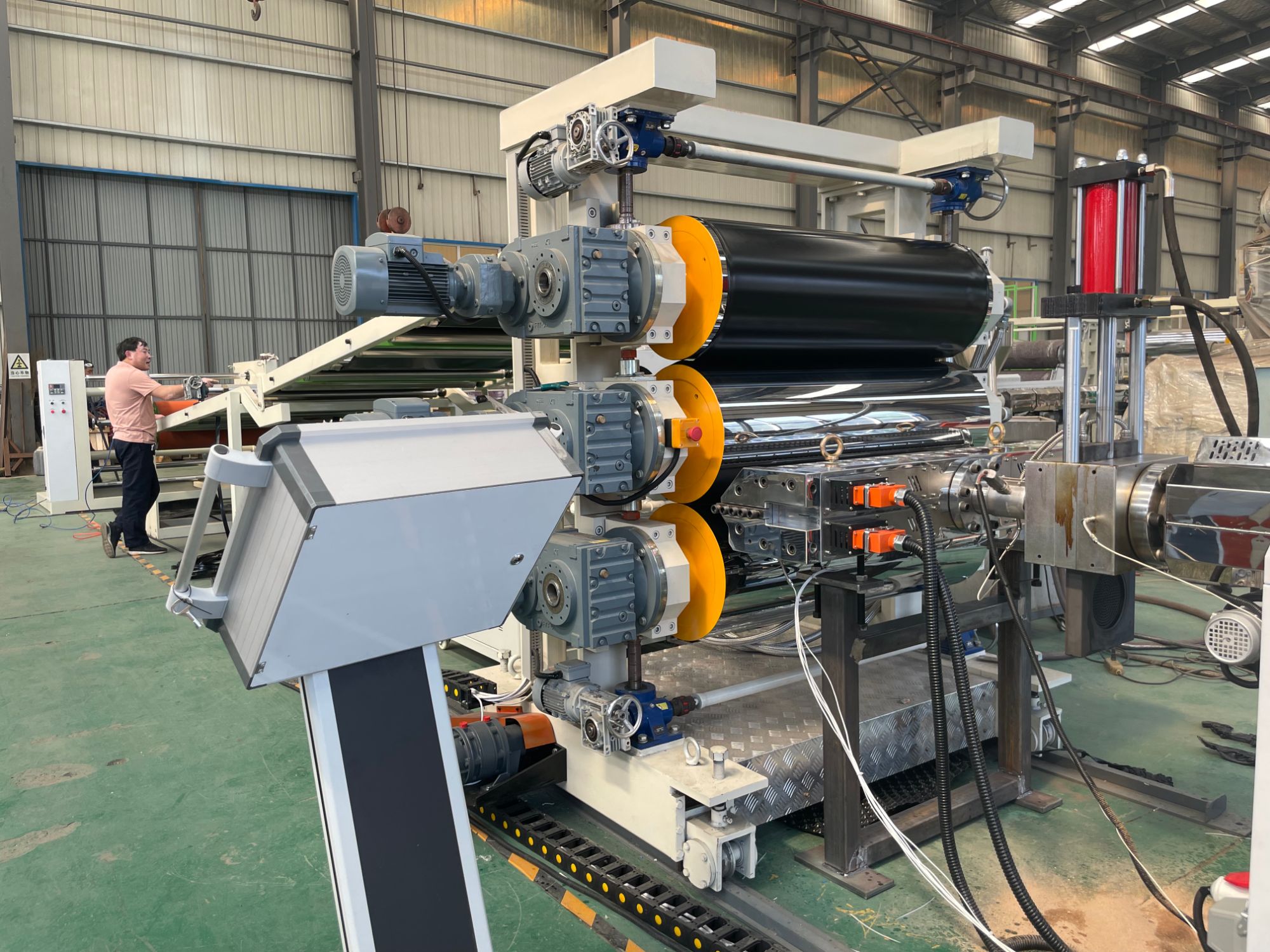
Every time a batch runs slightly over or under spec, the scrap bin fills a little more. Thickness drift rarely announces itself with a loud failure. Instead, it shows up as a slow accumulation of edge trim, rejected sheets, and parts that almost fit but never quite do. Operators get used to adjusting the same dial every shift, not realizing those small corrections are masking a process that's wandering off target. By the time anyone checks the scrap weight, the trend is already baked into the month's material costs.
The real trap is that drift looks like normal variation. A few microns here, a few grams there — each one seems too minor to investigate. But over a week, those minor shifts compound into thicker edges, uneven coating distribution, or a web that won't stay flat downstream. You end up trimming more to hide the problem, which generates more scrap, which makes the line look busier than it actually is. The hidden cost isn't the material you throw away; it's the yield you never realize because the process never settled into a stable band.
Fixing it starts with treating thickness as a signal, not a setting. Watch how the gauge moves across a full roll, not just at start-up. When you see a slow creep in one direction, that's a clue about roll wear, temperature swings, or tension that needs attention — long before scrap becomes the only visible symptom. Your scrap bin is basically a running total of every drift event nobody caught in time. Read it carefully and it will tell you exactly where the line is losing money.
Energy Usage Per Kilogram Beats Nameplate Numbers Every Time
Nameplate efficiency ratings have a comfortable, official look, but they rarely survive contact with a real production line. A compressor might carry a stellar kW/ton figure at full load, yet spend most of its life short-cycling at 40% capacity, burning far more energy per kilogram of finished product than the datasheet ever hinted. When you track actual meters against actual output—whether it’s dried powder, chilled liquid, or compressed air per batch—the gap becomes impossible to ignore.
The metric that matters is total energy consumed divided by kilograms of usable output, measured over a week or a month, not a 15-minute factory test. Plants that switch to this approach quickly find that a smaller, less glamorous machine with steadier part-load behavior often beats a high-nameplate unit that looks great on paper. Maintenance schedules, ambient temperature swings, and operator habits all get baked into the per-kilogram number, which is exactly why it beats nameplate numbers every time.
A Confusing Control Panel Will Stall Your Best Operators
Operators rarely read every label once a process becomes familiar. They navigate by position, shape, and color. So when a critical shutdown switch sits next to a harmless reset button that shares the same size and guard, even a veteran will slow down. The pause isn't lack of skill. It's the brain trying to resolve conflicting cues from a layout that treats unrelated functions as equals.
In a fast shift, that confusion compounds. Someone reaching for a flow control valve might pass over three similar-looking dials because the only differentiator is a faded line of text. Every extra second of scanning or double-checking multiplies across operators and shifts. What looks like a small interface flaw becomes a steady drain on throughput and, under pressure, a source of missed steps.
Fixing this rarely demands replacing the whole system. Grouping controls by function, separating high-risk switches with guards or spacing, and using consistent color signals let operators act from recognition instead of recall. When the panel supports the mental model rather than fighting it, experienced people move at the speed the process actually allows.
Manufacturer Responsiveness After the Sale Is a Production Metric
Most people think of production metrics as things you measure on the factory floor: cycle time, defect rates, throughput. But what happens after a product leaves the loading dock can tell you more about your manufacturing health than a dozen dashboards. When a customer reports a failure and the manufacturer drags its feet on replacement parts or technical support, that delay isn't just a service issue—it's a lagging indicator of deeper production problems. A responsive after-sale team depends on accurate documentation, accessible spare parts inventory, and a feedback loop that reaches engineering. If those systems are broken, the responsiveness collapses, and no amount of front-line politeness can hide it.
Consider a mid-sized equipment builder that tracked how long it took to resolve a post-sale issue from first call to final fix. Initially, the average was nine days. Digging into the delays, they found only a third of the time was actual repair work—the rest was waiting on parts that hadn't been forecasted properly, or hunting down a design change that never made it into the service manual. By treating after-sale responsiveness as a production metric, they forced manufacturing and service to share the same data. Within a year, resolution time dropped to three days, and warranty claims fell because early field failures were being fed back into the line before the next batch ran.
The real power of this metric is that it crosses silos. A slow response often traces back to a production decision made months earlier: a supplier switch that lowered initial cost but reduced part availability, or a rushed design that skipped serviceability review. When leadership holds production accountable for after-sale speed, it changes the calculus. Suddenly, building a machine that's easy to diagnose and quick to repair isn't a nice-to-have—it's a factory-floor KPI. Manufacturers that get this right stop treating service as a separate department and start seeing it as the final station on the assembly line, the one where the product proves whether it was truly built well.
The Purchase Price Is Just the Opening Line of a Long Cost Story
The sticker price on a product or service is rarely the whole story. Many buyers fixate on that initial number, comparing options side by side as if the purchase decision ends at the cash register. Yet the real expense often unfolds over months and years, quietly stacking up in ways that dwarf the original outlay. A classic example is the inkjet printer: the device itself might cost less than a dinner for two, but the replacement cartridges can quickly exceed the printer's price several times over within the first year of normal use.
Long-term costs take many forms, from routine maintenance and energy consumption to proprietary consumables, software subscriptions, and the labor needed to keep things running. A car that seems cheap upfront might demand premium fuel, expensive parts, and frequent servicing. A piece of industrial equipment could carry low acquisition cost but require specialized training for operators or costly downtime when it breaks. Even digital tools aren't immune—what begins as a modest monthly fee can balloon with per-user charges, add-on modules, and unavoidable upgrade cycles.
Savvy individuals and organizations look beyond the opening line and calculate the total cost of ownership before committing. They map out expected lifespan, consumable usage, energy draw, and support needs, comparing not just today's price but the five-year or ten-year financial picture. By shifting focus from that first number to the long cost story, buyers can avoid the trap of a cheap purchase that becomes an expensive burden, and instead choose options that deliver genuine value over time.
FAQ
Look beyond just the maximum output rating. Consider how often you'll run near peak capacity, how quickly you need to change sheet thickness or width, and whether the extruder's screw design can handle sustained output without overheating or excessive wear. A machine that constantly runs at 95% of its rated capacity will wear out faster than one sized with a comfortable margin.
Ask the manufacturer for real-world references with your specific polymer blend, not just generic data sheets. Pay attention to barrel and screw metallurgy, temperature control zones, and whether the feed throat design prevents bridging with regrind or high-bulk-density materials. The best test is a trial run with your actual raw material, not a standard pellet.
Differences come from drive efficiency, barrel insulation quality, heating/cooling zone control, and whether the machine uses AC or DC motors with regenerative drives. Ask for specific energy consumption per kilogram of sheet produced, not just installed power. Over a five-year period, a 10% efficiency difference can easily outweigh a slightly higher purchase price.
Focus on closed-loop thickness control, automatic die lip adjustment, and real-time melt pressure monitoring. These directly reduce manual tweaking and off-spec sheet. Avoid machines with flashy touchscreen interfaces that don't tie into actual process variables. The goal is fewer operator interventions per shift, not more buttons to press.
Support often matters more than the initial discount. A machine that sits idle for two weeks waiting on a spare gearbox or a technician costs more than you saved. Check whether the manufacturer stocks common wear parts locally, offers remote diagnostics, and has service engineers who understand sheet extrusion, not just general mechanics.
Screw and barrel replacement intervals, die lip wear, screen changer maintenance, and calibration of thickness gauges are often underestimated. Also factor in training time for operators unfamiliar with a new control system. A cheaper machine with a poorly documented HMI can burn thousands in lost productivity during the first year alone.
Modularity makes sense if you expect frequent product changes or want to add features like co-extrusion later. But if your sheet specifications are stable, a purpose-built machine with fewer optional interfaces is often more reliable and easier to troubleshoot. Don't pay for upgrade paths you will never use.
Conclusion
Choosing the right plastic sheet machine goes far beyond the glossy spec sheet. The real test of material flexibility begins inside the barrel, where screw design determines how well your line handles regrind, color changes, or a shift from PP to PET. A machine that looks capable on paper can still fight you daily if the screw geometry was never tuned for your actual resin mix. Meanwhile, thickness drift is the quiet profit killer—watching your scrap bin fill up tells you more about gauge stability than any tolerance claim. If the machine can't hold a consistent web under normal speed and temperature swings, you'll pay for it in wasted raw material long before the first service call.
Energy consumption per kilogram is another metric that rewards real measurement over nameplate optimism. A lower installed motor power may still deliver worse efficiency if the drive train and heating zones are poorly balanced. And all that efficiency means little if your operators can't navigate the control panel without frustration—every minute lost to confusing menus or non-intuitive recipe handling is a direct hit to output. After the sale, manufacturer responsiveness becomes part of your production line: a supplier who treats a hotline call as an afterthought can idle a line for days. Finally, remember that the purchase price is only the opening line of a much longer cost story, one written through maintenance, energy, scrap, and uptime. Smart buyers weigh the whole narrative, not just the first sentence.
Contact Us
Contact Person: LISA LEE
Email: [email protected]
Tel/WhatsApp: +86 13780696467
Website: https://www.qdpipemachine.com