High Tenacity Total Bright Filament Yarn Manufacturer: Key Qualities to Evaluate
2026-09-16
Choosing the right high tenacity total bright filament yarn manufacturer is more than a procurement decision—it's a strategic move that affects product durability, appearance, and long-term performance. Among the many suppliers claiming excellence, Changshu Polyester consistently stands out for its attention to exactly those qualities that matter most: tensile strength, uniform brightness, and consistent spinning quality. But what should you actually evaluate before committing to a partner? This guide breaks down the key attributes—from raw material sourcing to winding integrity—so you can avoid costly trial runs and make a confident choice from the start.
Why Tensile Strength Numbers Alone Won't Tell You Enough
A tensile strength figure, say 500 MPa, tells you how much pulling force a material can withstand before it snaps—but it skips the messy details. Two alloys can share the same number yet behave completely differently once you notch them, heat them, or expose them to a corrosive splash. One might give you a clean break with zero warning, while the other stretches and deforms noticeably first. That difference doesn't show up in a single data point on a spec sheet.
Real parts rarely fail in a straight, uniform pull. They crack at sharp corners, fatigue under repeated loading, or weaken from a tiny surface scratch. Yield strength, elongation at break, and fracture toughness each carry a piece of the story that tensile strength alone can't provide. A bolt that looks strong on paper can shear off under a minor impact simply because its ductility is poor—something the headline number never hinted at.
Even the test itself is easy to misread. Temperature, strain rate, and sample geometry all nudge the result. A plastic that tests tough at room temperature might turn brittle at -20°C, yet its tensile strength chart stays flat. If you're choosing a material for a real application, you need the whole stress-strain curve, not just its peak. Otherwise you're picking materials with one eye closed.
How to Verify True Total Bright Luster Before Ordering
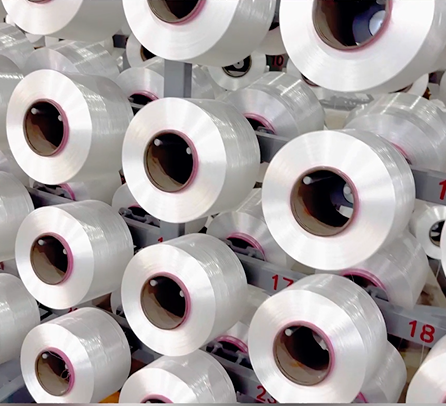
A glossy finish can look spectacular in a carefully lit product photo and flat in your hand, so start by asking for unedited footage under at least three lighting conditions: direct sunlight, overcast daylight, and indoor artificial light. Genuine high luster holds its brightness in shifting conditions instead of only glowing from one flattering angle. Request close-up shots that show the surface reflecting a simple object, like a window frame or a sheet of white paper, because mirror-like clarity is much harder to fake than a soft highlight.
Ask the seller to rotate the item slowly on video while keeping a fixed light source. If the shine jumps around as though it only exists in one spot, that often indicates a surface treatment or coating rather than true depth of luster. A dependable bright finish should show a consistent play of light across the whole surface, with subtle movement but no sudden dead zones. Compare it side by side with an ordinary household object, such as a stainless steel spoon or a white ceramic mug, to gauge whether the brightness truly exceeds everyday reflectivity.
When possible, order the smallest available sample and inspect it under the same lamps and windows where you will actually use or wear the item. Trust how it behaves at arm's length in normal room lighting, not just under a bright studio lamp. If the surface looks slightly milky or gray in shadow, that is a warning sign the luster has been boosted in post-production. Real total bright luster remains crisp and lively even when you move from a sunny spot to a dim corner.
The Hidden Cost of Inconsistent Denier in High-Tenacity Yarn
When denier drifts from one package to the next, the trouble rarely announces itself. A few tenths of a gram per 9,000 meters might sound negligible on paper, but in high-tenacity yarn those small swings translate into uneven load distribution across the fabric. The yarn that is slightly finer takes more strain per filament, creating micro-damage that only becomes visible after dyeing or coating exposes weak streaks.
Processors end up paying for the inconsistency through downtime and waste. Looms and knitting machines tuned for a specific tension respond poorly to thickness variation, so operators constantly chase settings or accept a higher rate of breakage. That breakage doesn’t just stop production; it creates knots and splices that later fail in critical applications like geotextiles or airbags, where a single weak point can scrap an entire roll.
The hidden part of the cost is how it compounds across the supply chain. Converters may overbuild specs to compensate, adding weight and material expense just to hedge against variance. Meanwhile quality teams spend hours correlating test reports from different batches, trying to pinpoint a root cause that should have been controlled at the spinneret. Every batch that barely passes still carries a reputational risk that no audit checklist can fully price.
What Raw Polymer Choice Reveals About a Manufacturer's Standards
The resin a manufacturer picks says more about their priorities than any brochure ever will. Facilities that chase cheap, mixed, or recycled feedstock often end up fighting a losing battle with batch-to-batch variation—melt flow drifts, tensile strength wobbles, and injection pressures need constant babysitting. On the other hand, a shop that consistently specs virgin, narrow-spec resins from the same upstream plant is telling you they value repeatable output and scrap rates under two percent over saving a few cents per pound.
Pull back the curtain on real-world uses like catheter tubing or food-contact seals, and the difference gets even sharper. A manufacturer still using industrial-grade polypropylene with unknown additive packages for a medical device isn't just cutting corners—they're gambling with regulatory exposure and field failures. The ones worth keeping as suppliers provide full material certifications, trace batch numbers back to the polymerization reactor, and can tell you exactly which antioxidant package or nucleating agent was used, because they've actually read the datasheets instead of just forwarding them.
Raw polymer choice is never a standalone decision. It ripples through drying protocols, screw design, mold temperature windows, and even the eventual recyclability of the finished part. When a manufacturer defaults to the cheapest available pellet, you'll see it later in warped housings, brittle snap-fits, and warranty claims that eat into their margin—and your trust. A deliberate polymer strategy, however, shows they've mapped the entire lifecycle and decided that long-term part performance matters more than a lower invoice price.
Batch-to-Batch Color and Finish Stability: A Field Test Guide
Keep a physical set of approved drawdown panels from the original batch on site. When a new batch arrives, spray or roll it onto identical substrate pieces at the same wet film thickness, then dry under the same racking conditions used in production. Compare those fresh panels to the approved set under daylight, fluorescent, and LED lighting to catch shifts that a single light booth misses, especially in metallic or pearlescent coatings.
Measure color difference with a portable spectrophotometer set to a fixed illuminant and observer, and treat a ΔE of 1.0 or less as the pass window for solid colors. For textured or flake finishes, also record gloss at 60° and 85°, plus a visual orange peel or sparkle rating against a standard panel. If the same batch shows a ΔE below 1.0 but the face angle looks darker or the flop is cloudier, trust the visual mismatch and mark that batch for review rather than forcing it into production.
Document every test result with batch number, date, temperature, humidity, and applicator settings. Keep a portion of the wet sample in a sealed container for at least the length of the project so disputes can be settled without returning to the supply chain. When a batch fails, do not adjust it on the fly; set it aside and notify the supplier with the panel data and retained sample, because shifting one pigment or additive can cascade into curing, adhesion, or weathering problems that field tests cannot catch.
When Custom Twisting and Winding Support Actually Matters
Not every cable assembly demands a bespoke twist-and-wind approach. For standard off-the-shelf harnesses, a generic helix or uniform bundling often suffices. But the moment you're dealing with mixed gauge conductors, shielded pairs, or delicate fiber-optic lines sharing a single jacket, the geometry of every twist and the tension of every wind start to matter in ways that generic tooling can't address. It's the difference between a loom that lays flat and one that fights you at every bend.
Consider a medical robot arm that must snake through tight, articulated joints while carrying power, signal, and a pair of micro-coaxial lines. If the twisting pitch isn't tuned to the natural lay length of each conductor, you get internal stress points that eventually cause intermittent opens. Likewise, in high-vibration environments like wind turbines or heavy machinery, proper winding support keeps the bundle from self-abrading. Customization here isn't about luxury; it's the only way to ensure conductors share the load instead of grinding against each other.
So when does customization actually earn its keep? When your design calls for a specific bend radius, a mixed cable family, or a need to control crosstalk through consistent twist rates. It's when you've already spent weeks optimizing a PCB layout or connector pinout, and the last thing you want is a cable assembly that undoes that work with a sloppy twist or uneven winding. At that point, the support isn't just a manufacturing nicety—it becomes a functional requirement that keeps your system reliable beyond the prototype bench.
FAQ
It usually comes down to how they handle the details that don't show up on a spec sheet. A strong manufacturer keeps raw polymer sources stable, traces every lot, and can show you data on elongation at break across at least twelve months of production rather than a single lab sample. The ones worth working with tend to have minimal variation in tenacity between batches and are honest about occasional deviations instead of hiding them.
Tenacity in cN/dtex is the headline, but it won't tell you much without elongation at break and the shape of the stress-strain curve. For total bright yarns, you also want a consistent round or trilobal cross-section and controlled finish pickup because that affects downstream weaving and coating. Check that they report values after conditioning, not just in ideal lab conditions.
Ask for retained samples from three or four production campaigns and measure the coefficient of variation yourself. A manufacturer with real control will have testing records at spinning, drawing, and winding stages, not just final inspection. If they hesitate to share internal rejection rates or seem confused about statistical process control, that is a signal.
Because not every application wants the same denier, twist level, or package build. A good partner can adjust draw ratios and finish types without weeks of downtime, which helps when your own product line shifts. It also shows they understand yarn behavior instead of running a fixed recipe.
Total bright yarn can show haze or dull streaks if the titanium dioxide is poorly dispersed or if spinneret condition is ignored. Request a brightness meter reading from several positions along a single package and across different production days. Visual inspection under standardized lighting in your own facility is still useful, but numbers reduce arguments.
They often matter more than price in the long run. A manufacturer that promises 20 days but regularly ships at 35 will disrupt your production planning. Ask for on-time delivery data from existing clients in your region, and pay attention to how they handle customs documentation and packaging damage claims.
Yes. Watch for a mismatch between stated denier range and the actual machines they run, or frequent changes in the polymer supplier. Another red flag is if they cannot explain how they control moisture content during winding, because that affects both tenacity and package stability. Vague answers about 'modern equipment' without specific line names or maintenance schedules usually indicate a trading company rather than a true manufacturer.
Conclusion
Evaluating a high tenacity total bright filament yarn manufacturer requires looking well past the headline tensile strength figure. A high break load doesn't guarantee stable performance under sustained tension, cyclic loading, or abrasion; you need stress-strain curve data and retention after exposure to heat or moisture. True total bright luster is also easy to misjudge from a small swatch. Request samples finished exactly as your production line runs them, then check reflectivity and clarity at several viewing angles, because overuse of brightening agents can leave a milky haze that flattens the desired sparkle. Denier consistency is another hidden cost driver: even small per-filament variation produces uneven fabric weight, visible streaks after dyeing, and weak points at seams. Ask for CV% of denier across multiple bobbins, not just an average. The raw polymer choice reveals how seriously a maker controls quality—virgin chip sources, stabilizer packages, and melt filtration levels all influence long-term strength and defect rates in the final package.
Color and finish stability from batch to batch often separates dependable suppliers from risky ones. Keep an approved reference skein and compare every incoming lot under both D65 and horizon light, then run a simple rub or extraction test to confirm finish add-on and evenness. Even slight shifts in spin finish affect downstream friction, static, and dye pickup. Custom twisting and winding support matters when your application depends on a specific twist direction, ply count, or package build. A manufacturer that can adjust traverse length, taper, and wax application without excessive lead time helps you avoid snagging, poor unwinding, or excess lint at the knitting or weaving stage. Finally, pay attention to how the supplier handles a nonconforming lot: clear communication, root-cause analysis, and quick replacement are signs of a partner that understands quality is built into the process rather than inspected in at the end.
Contact Us
Contact Person: CONNIE
Email: [email protected]
Tel/WhatsApp: 86-0512-53671634
Website: https://www.lida-yarn.com/