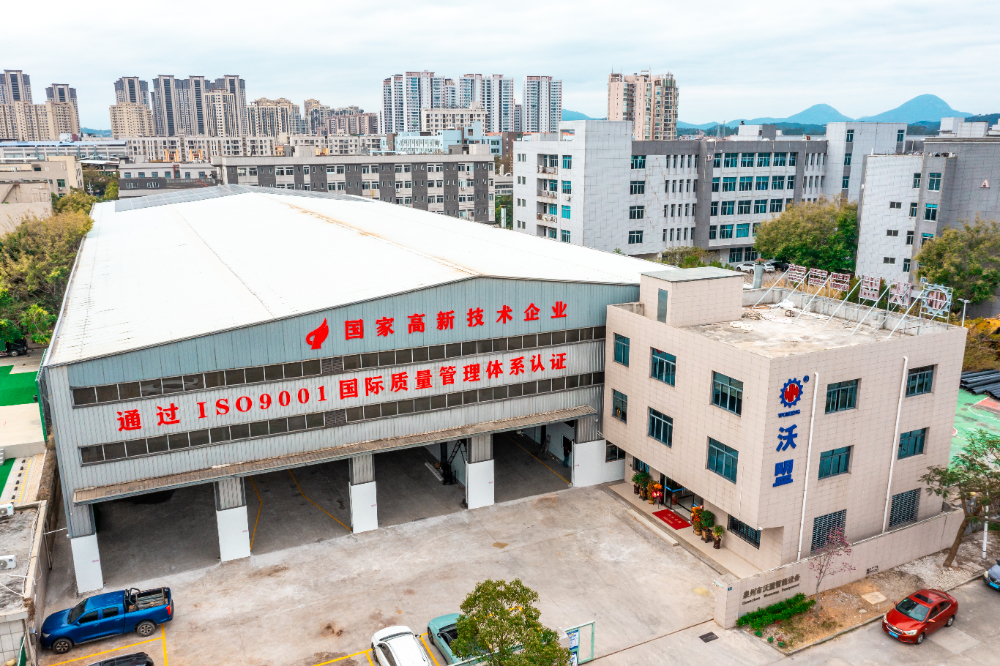
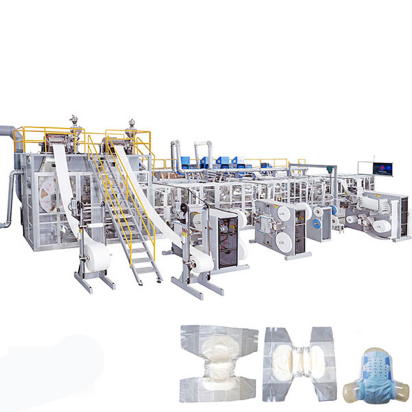
Full Automatic Adult Diaper Making Machine: Transforming Hygiene Product Manufacturing Efficiency
2026-09-17
Most adult diaper lines are still playing catch-up with demand—downtime creeps in, material waste adds up, and every 'minor' stoppage quietly erodes margins. The full automatic adult diaper making machine from Womeng challenges that status quo. It doesn't just automate steps; it rethinks the entire production flow so that speed, precision, and material yield stop competing against each other. Here's a closer look at how this shift is rewriting the efficiency playbook for hygiene manufacturers.
From Hand-Feeding to Lights-Out Runs: Why Adult Diaper Lines Lagged Behind Baby Diaper Automation
Adult diaper production lines have not kept pace with baby diaper automation largely because the product range refuses to standardize. Baby lines often run a handful of SKUs at high speed for hours, with minimal material swaps. Adult products, by contrast, span light incontinence pads to heavy overnight briefs, each with different absorbency cores, waistband designs, and size grading. Many converters still feed sheets and elastic manually because frequent changeovers make robotic loading economically unattractive—every few pallets require a different configuration, and the downtime for automated setup erases any speed advantage.
Material behavior adds another barrier. Adult diapers use softer nonwoven topsheets and stretchier side panels to accommodate sensitive skin and varying body shapes. These materials drift, fold, or bunch at high line speeds, demanding far more sophisticated vision systems and tension control than baby diaper machines ever needed. Years of concentrated demand in the baby segment allowed equipment builders to fine-tune parameter libraries until lights-out operation became routine. Adult lines, dealing with fragmented specifications, never accumulated that kind of stable dataset, so they remain stuck with operator intervention at key steps.
The fundamental issue is batch size. A typical adult diaper contract manufacturer may produce only a tenth of the volume of a baby diaper plant, with orders that run for a few hours at most. In that context, hand-feeding a line is not backwardness—it is the rational choice. Retrofitting for fully automated feeding, automatic splice detection, and closed-loop rejection costs more than the labor saved over the machine's remaining life. Until brands consolidate their adult product portfolios or orders grow large enough to justify dedicated lines, the gap between hand-fed adult lines and lights-out baby lines will persist.
The Real Bottleneck Wasn't Demand—It Was Changeover Time Between Sizes and Absorbency Levels
At first glance, a dip in output looked like a softening market. Orders were still coming in, but the line couldn't keep pace. After walking the floor and watching the schedule, the real culprit became obvious: the minutes and hours lost whenever the crew switched from one size to another or moved between absorbency levels. Demand was never the issue—the line simply spent too much of its shift standing still.
Each changeover meant stopping the line, purging materials, recalibrating forming and cutting stations, and then running test pieces until the specifications matched. A switch from size 3 to size 4 could eat forty-five minutes, and moving from regular to overnight absorbency added even more time for raw material changes and quality checks. Multiply that across three or four changeovers per day, and the production schedule quietly lost whole hours of capacity.
The fix wasn't about speeding up the machines or adding a shift. It was about reducing changeover time itself—staging materials by the line, pre-setting tooling, and training crews to run transitions with less trial and error. Once changeover stopped being treated as a minor annoyance and became a measured, managed part of the schedule, the same line began hitting output targets without any extra demand pulling it forward.
What Actually Happens Inside a Full Automatic Line When Servo Drives Replace Pneumatic Cylinders
Replacing pneumatic cylinders with servo drives on a full automatic line changes the machine's heartbeat. Air cylinders move in a binary way: full extend, full retract, with a soft cushion at the ends. Servo drives, by contrast, offer continuous position, velocity, and torque control. On a packaging line, for instance, a servo-driven pusher can accelerate gently, cruise at high speed, then decelerate precisely before contact, eliminating the hammering effect that wears out mechanical stops and creates product damage. The line becomes quieter, and maintenance intervals stretch because there are no seals to leak or air fittings to work loose.
The real shift happens in the control architecture. Pneumatic systems rely on external sensors to confirm end-of-stroke, and adjusting stroke length means physically moving a hard stop or swapping out a cylinder. Servo drives encode feedback directly from the motor, so the PLC knows the exact position at every millisecond. This allows recipe-driven changeovers: a line running bottles of different heights can adjust the filling nozzle position or label applicator stroke from the HMI without a technician touching the machine. Downtime for format changes shrinks from thirty minutes to under a minute, and the line can produce smaller batch sizes economically.
Energy consumption also tells a different story. Pneumatic systems constantly leak compressed air, and generating that air is one of the least efficient uses of electricity in a factory. Servo drives only draw current during movement and can regenerate power during deceleration, feeding it back to the DC bus. On a high-cycle pick-and-place station, the energy savings can exceed 60 percent. Add to that the removal of air preparation units, FRLs, and miles of tubing, and the full automatic line becomes not only faster and more precise but also significantly simpler to clean and maintain.
Waste Per Diaper Drops Sharply Once Tension Control and Ultrasonic Bonding Work in Sync
On high-speed diaper lines, material waste rarely comes from a single dramatic failure. It builds up quietly through small misalignments—a slight drift in web tension here, an inconsistent bond there. When tension control and ultrasonic bonding operate as separate islands, each system compensates for the other's errors too late. The result is a steady stream of trimmed-off edges, rejected pads, and half-finished products that never make it past inspection.
Synchronizing the two changes the dynamic entirely. Tension feedback now reaches the ultrasonic bonding station in real time, so the material entering the horn gap is always under the same controlled stretch. Ultrasonic energy is then delivered only where the material is properly positioned, eliminating weak spots and over-welded areas. Operators on the floor notice the difference quickly: the scrap bin stops filling up between shift changes, and the cutting knives stay cleaner because there's less stray material to gum them up.
The numbers back up what the line workers see. Waste per diaper often falls by double digits within the first week of true synchronization, not because one parameter was tweaked, but because the entire material path stopped fighting itself. That kind of reduction doesn't require new equipment—just a control architecture that treats tension and bonding as one continuous process instead of two separate tasks.
Floor Space Stays the Same, Output Triples: How One Machine Redrew the Factory Layout
The factory floor used to be a tangle of carts, staging racks, and half-finished parts waiting for the next station. Three separate machines—a saw, a drill press, and a finishing unit—each demanded their own footprint, plus buffer space for material in between. Operators walked back and forth, forklifts idled in the aisles, and every part took a circuitous route from raw stock to shipping. Output crept upward in single digits, but the layout itself hadn't changed in over a decade.
Then a single, no-larger-than-expected machining center rolled in and quietly erased half the aisle traffic. It handled cutting, tapping, chamfering, and deburring in one clamping, so parts no longer traveled from station to station. The old saw and drill press were wheeled out. The remaining floor stayed exactly the same size—nobody knocked down a wall or leased extra space. What changed was the flow: one operator now loaded stock at one end and collected finished parts at the other, while the space that once stored work-in-progress became open walking room.
Within two quarters, output had tripled on the same square footage. The gains didn't come from running the machine faster; they came from removing the hidden waiting and moving between processes. Changeovers that used to eat half a shift now took minutes. Scrap from repeated clamping and handling dropped. The floor didn't expand—it simply started breathing again. That one machine didn't just replace three older ones; it redrew the entire logic of the layout, and the old footprint turned out to have far more capacity than anyone had assumed.
Operators Stop Fixing Jams and Start Reading Real-Time Defect Maps Instead
For years, the routine was the same: a jam alarm shrieks, and the nearest operator rushes over to wrestle with stuck material, often guessing at the root cause. But that reactive loop is fading fast. Now, with live defect maps pulled from sensor arrays and vision systems, operators don’t just react to stoppages—they see where trouble is brewing before it halts the line. Instead of yanking at a crumpled sheet or clearing a blocked chute, they glance at a screen that pinpoints thinning, misalignment, or contamination in real time, then walk directly to the offending station with a fix already in mind.
This shift changes more than just the job title. The operator’s role becomes less about brute force and more about reading patterns: heat signatures drifting upward near a roller, a recurring cold spot on a coating head, a slow drift in tension that no single sensor would flag but the map reveals as a trend. One line veteran described it as “going from firefighter to weather forecaster.” The jams still happen, but far less often—and when they do, the map has already logged the sequence of events that led up to the failure, turning every stoppage into a teachable moment rather than a mystery.
The most striking result is how quickly veteran operators adapt. A decade of muscle memory doesn’t vanish, but it gets rechanneled: instead of listening for a change in motor pitch, they’re cross-referencing acoustic data with visual overlays. The real-time defect map becomes a shared language between the floor and the engineers upstairs, bridging the gap that used to be filled with shouted guesses and handwritten logs. In plants where this shift has taken hold, the phrase “we’ll fix it when it breaks” has quietly disappeared from the shift handover.
FAQ
The major difference is that a fully automatic line removes manual intervention at every critical step, including raw material splicing, tension control, elastic application, core forming, and finished product stacking. Semi-automatic systems still rely on operators for material loading, web alignment, or quality checks, which introduces variability and limits throughput. A full automatic machine uses servo-driven axes and closed-loop feedback to keep all stations synchronized without operator correction.
Waste drops because the machine continuously monitors web tension, automatically corrects lateral drift, and uses precise servo cutting to reduce trim and edge scrap. Automatic splicing eliminates the long tail and head waste common with manual roll changes, and real-time thickness feedback adjusts adhesive and SAP dosing so defective panels are rejected before full assembly.
Multi-axis servo synchronization, ultrasonic bonding, and vision-guided positioning are the key enablers. Servo motors keep each forming drum and cutting station phased to the master virtual axis, while ultrasonic bonding removes the need for slow thermal curing. Inline vision systems check elastic spacing and core placement at full speed, triggering only targeted rejection rather than stopping the line.
Depending on product size, pad length, and machine configuration, a well-tuned fully automatic line typically runs between 300 and 600 pieces per minute. High-speed variants with larger forming drums and faster ultrasonic units can exceed 600 pieces per minute for pull-up styles, though sustained output is usually lower to allow adhesive stabilization and quality sampling.
The control system stores recipe parameters for each product size and automatically adjusts forming drum vacuum, SAP feed rate, and elastic stretch ratio. During a run, feedback from linear encoders and vision sensors detects any drift in core position or elastic spacing, and the motion controller compensates in real time. This closed-loop correction keeps placement accuracy within a fraction of a millimeter across millions of cycles.
These machines process nonwoven fabrics, polyethylene backsheet, hot-melt adhesives, superabsorbent polymer, fluff pulp, and elastic films or strands. Changeovers are managed through recipe-driven servo adjustments and quick-change modules for forming drums, cutting dies, and elastic guides. Many systems also include automatic width adjustment and self-cleaning adhesive applicators to shorten downtime between sizes.
Automation reduces direct labor per unit, cuts material waste, and lowers the rejection rate through early defect detection. Predictive maintenance from sensor data prevents unplanned breakdowns, and energy-efficient servo drives and ultrasonic bonding consume less power than older mechanical lines. Over a typical multi-year service life, these savings usually outweigh the higher purchase price.
Inspection is not a separate offline step; it happens at multiple points along the line. Cameras check elastic placement, core symmetry, and tape positions immediately after assembly, while metal detectors and weight sensors verify each finished pad before folding and packaging. Defective units are automatically diverted to a reject conveyor, and the system logs defect type and frequency for trend analysis.
Conclusion
Adult diaper lines stayed stuck with manual feeding and long changeovers while baby diaper machines had already gone fully automatic. The blocker wasn't demand—it was the hours lost switching between sizes and absorbency levels. Replacing pneumatic cylinders with servo drives removes that obstacle. Instead of stopping to rebuild forming sections, the line adjusts clamping, folding, and cutting positions from the control panel. A run can move from a medium moderate-absorbency brief to a large high-absorbency one in minutes, not shifts. That alone changes how a factory schedules production, because one line can now handle the mix that used to require three separate setups.
Tension control working with ultrasonic bonding keeps every layer aligned, so the fluff and film no longer drift apart or bunch at the sealing station. Waste per diaper falls quickly because rejects come from misfeeds and weak welds, not from operator error. The floor space requirement stays the same, yet output triples—one fully automatic machine replaces a bank of older semi-automatic ones, and the extra room goes to raw material staging or finished goods. On the operator side, the job shifts from clearing jams to reading live defect maps. Each weak bond or splice shows up on screen before it becomes a bad diaper, so the line runs longer between stops. That combination of faster changeover, tighter material control, and real-time visibility is what actually moves adult hygiene manufacturing forward.
Contact Us
Contact Person: Jessie Lai
Email: [email protected]
Tel/WhatsApp: 86-188594442931
Website: https://www.wm-machinery.com