Custom Trigger Switch Supplier: What to Look for Before You Partner
2026-10-01
You've got the drawings, the target price, and a shortlist of custom trigger switch suppliers. But a polished quote only tells you so much. The real test is what happens when tolerances tighten, a batch fails incoming inspection, or your forecast doubles overnight. KEJIAN ELECTRONICS suggests looking beyond catalog promises and checking a handful of make-or-break details before you partner. This post covers exactly what to ask.
Can They Actually Build What You’re Sketching?
You can draw a cantilever that floats like a diving board, but the moment steel meets soil, things get real. Most sketches don’t survive contact with a foundation crew—not because the idea is bad, but because nobody translated the line weight into load paths. That gap between a beautiful napkin drawing and a set of shop drawings is where projects stall, budgets balloon, and good ideas quietly die.
The right builder doesn’t just nod at your sketch and say ‘we’ll figure it out.’ They point to the corner where the roof flattens, ask how you want to hide the downspout, and tell you the parapet detail will fight the waterproofing. That early pushback feels like friction, but it’s the only thing that turns a sketch into a building you can actually stand inside.
Prototyping Speed Tells You More Than a Spec Sheet
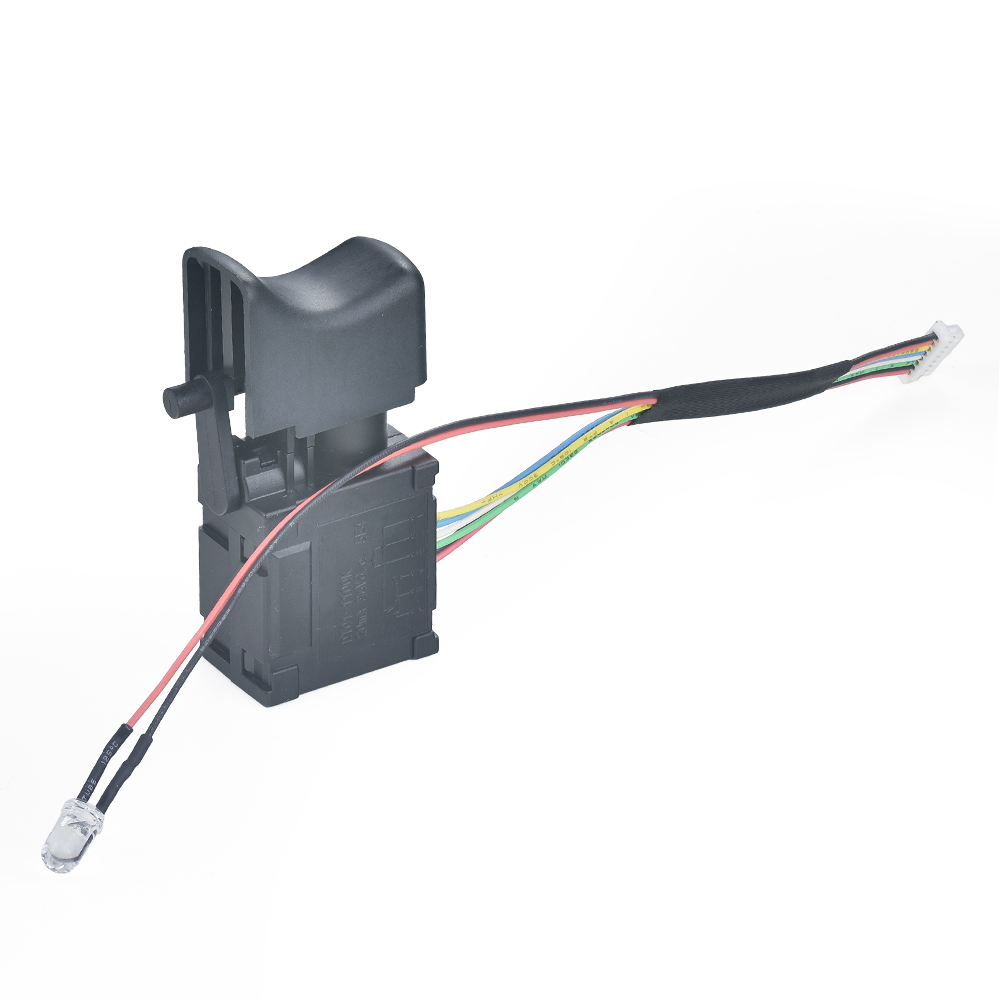
A spec sheet gives you numbers on paper: processor clock speed, memory bandwidth, theoretical throughput. Useful, but it's a static promise. When you actually build a quick prototype—something you can hold, run, or click through—you learn how those numbers translate into real-world responsiveness. Does the interface feel snappy under load? Does the motor stall when you reverse direction suddenly? Those are the moments that expose bottlenecks no datasheet ever mentioned.
I've watched teams spend weeks debating specs, only to discover in an afternoon of prototyping that the real constraint was heat dissipation, or a library's garbage collection pause, or simply the way users gripped the device. The prototype doesn't lie. It shows you the integration pain, the unexpected latencies, the tiny friction points that add up to a sluggish experience. Speed of prototyping is directly tied to speed of learning: the faster you can iterate from idea to working model, the sooner you can discard assumptions that looked great on a spreadsheet.
That's why I'd rather see a rough, ugly prototype running on a bench than a beautifully formatted spec sheet. The prototype is a conversation with reality. It tells you what to measure next, what trade-offs actually matter, and where your engineering effort should go. By the time you're done, you've learned more in a day of hands-on testing than a month of reading documentation.
Hidden Costs in Low-Volume Custom Orders
Low-volume custom orders rarely show their true price on the quote. Setup and programming time gets amortized over a handful of units, so a single cavity mold or a bespoke fixture can add hundreds of dollars before the first part is even produced. Material suppliers often impose small-quantity surcharges or force you to buy full sheets, coils, or minimum resin batches, leaving you paying for scrap you never see. Then there’s the labor side—operators still need to load, monitor, and inspect each piece, but without volume, those minutes per part don’t shrink the way they would on a 10,000-part run.
Another overlooked line item is revision churn. A client tweaks a dimension or swaps a finish after the first sample, and suddenly you’re re-quoting, re-ordering materials, and maybe re-cutting tooling. At low quantities, those iterations carry a heavier percentage weight because there’s no large order to absorb the rework. Shipping and handling also become uneven: a pallet of five cartons still costs the same fuel surcharge and driver time as a pallet of fifty, but you’re paying that fixed leg across far fewer units. Rush fees creep in when a low-volume job gets squeezed between bigger production slots, as schedulers prioritize accounts that keep machines running.
To avoid margin erosion, treat the first quote as a floor, not a ceiling. Ask for a line-item breakdown that separates one-time engineering charges, tooling, and setup from per-unit costs, and confirm whether those one-time charges are retained or refunded with reorders. If you can wait, batch several custom orders together or align your spec with materials already in stock—that alone can remove small-quantity surcharges. And always price in a buffer for at least one design revision, because on low-volume work, a single change request can wipe out the profit that was supposed to cover everything else.
Engineering Support That Goes Beyond Email
When a production issue hits at 2 a.m., the last thing you want is an auto-reply promising a response within 24 hours. Our engineering support is built around direct access to the people who actually wrote the code. No ticket queues, no escalation tiers that go nowhere. You get a shared Slack channel with our developers, live debugging sessions, and rapid hotfixes that keep your systems running.
We don't just answer questions; we dig into your environment. Remote pair debugging, log analysis, and infrastructure reviews are standard practice. If a bug is ours, we patch it fast. If it's yours, we help you understand exactly what's happening and how to avoid it next time. That kind of back-and-forth can't happen over email threads that drag on for days.
Beyond reactive fixes, we proactively monitor usage patterns and flag potential bottlenecks before they become outages. Our team reviews your stack every quarter and suggests optimizations you might have missed. Think of it as having an extra senior engineer on call, not a help desk.
Testing and Certification You Don’t Have to Chase
When a product is ready to ship, the last thing anyone wants is to spend weeks chasing down test labs, deciphering standards, and waiting on hold for a status update. Our process removes that entire scramble. Certification milestones are tracked internally, and you get a single clear timeline instead of a tangle of emails.
The heavy lifting happens behind the scenes. Our engineers work directly with accredited labs and notified bodies, handling everything from initial documentation to final report review. If a standard changes mid-project or a test needs a minor design tweak, we flag it early and propose a fix before it becomes a blocker. You won’t be left guessing which regulation applies to your market.
What lands on your desk is the finished package: certificates, test reports, and a compliance summary ready for distributors or retailers. No follow-up calls, no last-minute surprises. You don’t chase certification; it arrives as a natural part of your launch timeline.
Communication Habits That Predict Delivery Dates
Most people assume delivery dates get missed because of supply chain chaos or lazy vendors, but in reality the clearest warning signs show up in how people talk. When a supplier keeps saying “should be fine” or “we’re aiming for Friday,” they’re leaving room to miss. Precise language like “we will ship on the 14th by 4 p.m.” is rare, but it’s the only kind that matches on-time performance. Vague optimism is not a plan; it’s a hedge.
Another habit that predicts lateness is silence around problems. Teams that hit their dates tend to raise issues early, often within hours of spotting them. Teams that miss dates go quiet for days, then surface with a long explanation and a new timeline. That gap between “something feels off” and “we need to tell the client” is where delays are born. The longer the pause, the less likely the original date will hold.
Watch also how people respond to direct questions. If you ask “is Thursday locked?” and get “we’re doing our best” instead of “yes or no,” the date is already soft. High-performing communicators treat dates as commitments, not wishes. They confirm, push back, or ask for trade-offs immediately. The habit of avoiding a clear answer is itself a signal: the delivery date is already at risk.
FAQ
Ask for three recent custom projects with drawings or samples. A capable partner will walk you through the design trade-offs they made—contact geometry, actuation force, travel distance—without hesitating. Request a design-for-manufacturing review of your initial sketch and see if they catch tolerance issues or suggest material swaps that reduce wear.
Look for direct access to an engineer, not just a sales rep. They should offer simulation or at least empirical data on contact life, snap force curves, and temperature behavior. A good sign is when they push back on unrealistic specs and propose alternatives that simplify assembly or extend cycle life.
Beyond generic ISO 9001, check for product-level certifications like UL, CE, or RoHS depending on your market. Ask how they test contact resistance drift, insulation resistance, and mechanical endurance. A reliable supplier will share internal test reports and let you audit their in-process inspection points.
Give them a small, slightly ambiguous spec and time the response. Do they ask smart clarifying questions? Do they quote a realistic prototype lead time with tooling included? Suppliers who promise 3-day samples on complex custom triggers often cut corners. Look for a partner that offers rapid 3D-printed functional mockups before committing to hard tooling.
Ask about their process capability index (Cpk) for critical dimensions and contact force. Request data from a previous ramp-up where they went from prototype to >10k units/month. Listen for mentions of automated assembly, inline testing, and fixture calibration schedules. If they rely solely on manual inspection at scale, consistency will suffer.
It's often the difference between a switch that feels crisp for 100k cycles and one that turns mushy after 10k. Ask which contact alloys they recommend for your current and voltage, and why. A knowledgeable supplier will discuss trade-offs between silver-nickel, silver-cadmium oxide, or gold plating based on arcing and corrosion resistance—not just cost.
Watch for vague answers about tolerance stacking, no in-house tooling capability, or reluctance to show previous failure analysis. If they can't explain how they handle contact bounce, arc suppression, or spring fatigue, they're likely not equipped for custom designs. Also be wary if they accept every spec without question—that often means they haven't thought through the assembly challenges.
Introduce a minor design change after the first prototype and see how they handle it. Do they document the change, update the BOM, and explain cost/schedule impact clearly? A good partner responds with a revised DFM and a realistic timeline, not just 'no problem.' You're really evaluating whether they'll give you early warnings when something is off during mass production.
Conclusion
Before you commit to a custom trigger switch supplier, confirm they can actually turn your sketch into a working part. Ask for past examples of odd geometries or modified actuation forces; if they only show catalog items, that is a red flag. Prototyping speed reveals more than any data sheet. A shop that can deliver a rough first article in days, even with hand-soldered joints, understands urgency and likely has in-house machining. Low-volume hidden costs matter too: setup charges, minimum order quantities, tooling amortization, and color matching fees can quietly inflate your budget. Ask for a transparent breakdown of all non-recurring engineering costs before the first sample.
Engineering support should go beyond email. You want a supplier who will call you when your drawing tolerance does not match actual switch travel, or who suggests a more reliable contact material without being prompted. Testing and certification should not be your job to chase. A good partner owns the process for UL, RoHS, or IP ratings and sends you pre-compliance reports before you even ask. Communication habits predict delivery dates better than promised lead times. If they confirm receipt of your drawings, flag missing dimensions, and send weekly photo updates, you can trust their schedule. If every question gets a one-line reply days later, expect delays. Weigh these factors more heavily than price.
Contact Us
Contact Person: Anna lin
Email: [email protected]
Tel/WhatsApp: +86 13567768885
Website: https://www.kjele.com/