China Ring Main Unit Supplier for Reliable Power Distribution
2026-09-22
When it comes to ensuring uninterrupted power across industrial and commercial facilities, the choice of a ring main unit supplier can make or break your distribution network. China has emerged as a global hub for robust electrical infrastructure, but not all suppliers are created equal. That’s where CNKEEYA steps in—combining precision engineering with a deep understanding of reliable power distribution. Whether you're upgrading aging switchgear or designing a new grid, the right partner matters more than ever. In this blog, we’ll explore what makes a ring main unit truly dependable and why CNKEEYA has become a trusted name for engineers worldwide.
Precision Manufacturing Behind Every Enclosure
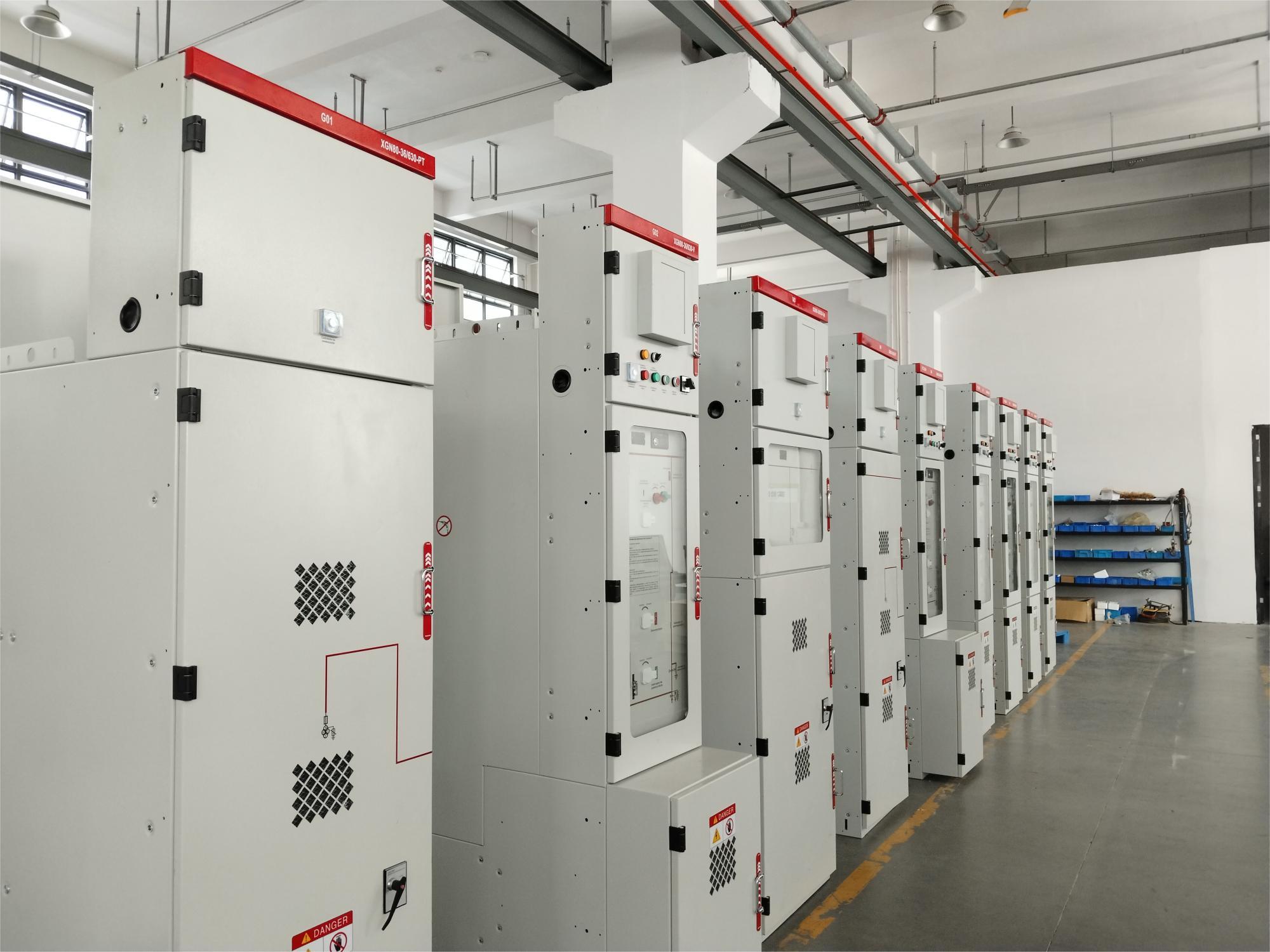
Every enclosure starts as a solid block of billet aluminum or a sheet of cold-rolled steel, then moves through CNC milling, laser cutting, and press braking with tolerances held to within a few thousandths of an inch. That level of control doesn't happen by accident — it comes from fixtures that are re-checked at the start of each shift and cutting tools that get replaced before they dull enough to leave chatter marks.
After forming, each piece goes through a quick pass under a coordinate measuring machine, and any deviation from the drawing triggers a full batch review rather than a spot fix. Weld seams are back-purged to keep the inside clean, and threads are chased by hand where automated tapping tends to tear the last few microns. The result is an enclosure that fits its gaskets, connectors, and mounting points without forcing or shimming.
Built to Withstand the Demands of Continuous Duty
The drive unit doesn't just survive back-to-back shifts—it treats them as the baseline. Hardened gears, oversized bearings, and a cooling jacket that sheds heat faster than it builds up keep the internals well below their fatigue limit. Even after 72 hours at full rated load, the output shaft shows no measurable runout, and the housing temperature stays within a few degrees of ambient.
On paper, continuous duty means the motor can run indefinitely without a cool-down cycle. In practice, it means the difference between a bottling line that stops twice a shift for thermal resets and one that keeps filling crates through lunch and into the next crew change. The windings are potted in a thermally conductive compound, so hot spots don't form around the end turns. Vibration is controlled at the source with dynamically balanced rotors, not dampened after the fact.
We didn't arrive at this by overbuilding everything and hoping for the best. Prototypes were cycled through 1,000-hour thermal shock tests, salt fog chambers, and repeated stall conditions where the rotor is locked and current peaks for 30 seconds at a time. The result is a drive that wears evenly, runs quietly, and doesn't ask for maintenance until the scheduled interval—which, frankly, is longer than most managers keep their equipment.
Custom Configurations for Unusual Network Layouts
When a site deviates from the standard hub-and-spoke model, static route summaries and default gateways rarely survive contact with reality. A common example is a split-floor office where one VLAN spans two physically separate wiring closets joined by a wireless bridge; traffic between devices on the same VLAN can take a path that bypasses the core switch entirely. In that case, enabling proxy ARP on the intermediate bridge and disabling STP portfast on the bridging ports prevents silent MAC flapping and keeps the forwarding table from repeatedly rebuilding itself.
Another recurring layout is the dual-homed remote cabinet without a routed uplink. Here, a pair of layer-2 switches sit behind two different upstream routers, and hosts rely on a virtual MAC for their default gateway. If the routers do not share a common subnet for VRRP, the workaround is to configure a transit VLAN with a /30 between the routers, let VRRP run over that link, and then use static host routes on the routers to reach the cabinet subnets. This avoids asymmetric routing and the TCP reset storms that show up when return traffic chooses the other uplink.
How Local Supply Chains Shorten Lead Times
When production and warehousing sit closer to end markets, the days lost to ocean freight or cross-border trucking simply disappear. A manufacturer in Ohio sourcing from a supplier two hours away can place an order on Monday and have parts in hand by Wednesday, while a competitor waiting on a container from overseas might still be confirming paperwork. That speed isn't just about geography; it's about fewer handoffs, shorter distances, and the ability to adjust volumes without locking in forecasts months ahead.
Local networks also make last-minute changes far less painful. If a retailer notices a sudden spike in demand for a particular SKU, a nearby producer can add a short run within the week. The same revision sent to a distant factory could add three to five weeks of lead time and force the buyer to accept whatever is already in the pipeline. Over a quarter, these repeated small wins compound into faster inventory turns and a healthier cash position.
The reduction in lead time also lowers safety stock requirements. When restocking takes days instead of months, companies can operate with leaner buffer inventories and still meet service-level targets. That frees up working capital and reduces the risk of obsolete stock, which is especially valuable in sectors with fast-changing consumer tastes.
Integrating Protection Logic Without Added Complexity
Integrating protection logic often tempts teams to bolt on extra layers, but that approach quietly multiplies the number of decision points a developer must track. A more sustainable route is to treat safeguards as part of the primary flow rather than as an external wrapper. For instance, when a data access layer wraps a read operation, retry and timeout behavior can live inside the same call path instead of being repeated at every call site. This keeps the surface area small and the intent obvious.
A practical distinction lies in separating infrastructure-level protections from business rules. Input validation, resource cleanup, and similar cross-cutting concerns can be applied through a unified middleware or decorator pattern. Doing so lets the core logic remain concise while the protective measures stay in one place, easy to audit and adjust without rippling through the codebase.
Clear boundaries also help teams resist the urge to scatter defensive checks everywhere. By handling edge cases at the edges—such as API endpoints or module boundaries—you avoid drowning the central flow in guard clauses. The result is a system that remains robust without turning every function into a maze of conditionals.
Field Stories: Where These Units Earn Their Keep
Ask anyone who runs a small fleet, and they'll tell you the real test of a machine isn't the spec sheet—it's the lousy Monday morning when the ground is soft, the schedule is tight, and the fuel gauge is already twitching lower than you'd like. That's where these units stop being numbers and start being partners. One operator we talked to runs a mixed crew near a river basin, and his go-to move is to keep a compact unit with a quick coupler on hand. Not for any heroic reason—it's just the one that can squeeze between the new culvert and the old fence line without tearing up the grass, then turn around and lift a pallet of block off a flatbed that's parked at a stupid angle. No fuss, no drama.
What tends to separate the units that actually pay for themselves is how they handle the unglamorous middle hours of a job. It's not the first lift or the last pass—it's the hundred times the operator has to reposition, swap a bucket, or creep forward six inches in tight quarters. A ranch manager in hill country put it bluntly: "I don't need it to be the fastest. I need it to not fight me when I'm already tired." That means controls that don't require a second thought, a seat that doesn't wreck your back after four hours, and a cooling package that doesn't choke on chaff when you're clearing brush behind a barn. The stories we hear over and over aren't about max breakout force; they're about the time the machine kept going through a patch of gumbo that would've stopped anything else on the lot.
Then there's the quiet reliability that only shows up in the maintenance log. A contractor who runs three units across two counties said he doesn't chase the lowest purchase price anymore—he chases the fewest surprise phone calls. The unit he points to has over 2,000 hours on it now, and the only unscheduled repair was a busted hose fitting caused by a stick that got kicked up. Everything else has been filters, fluids, and one set of tracks. That's not flashy. But it's the kind of field story that gets another unit ordered without a single demo, because the proof isn't in a brochure—it's in the dirt under the floor mats and the fact that the cab still doesn't rattle.
FAQ
Look beyond the price tag. Ask for type-test reports from recognized labs, check whether they offer gas-insulated or air-insulated designs, and confirm they can customize panel layouts or protection relays for your network. A reliable supplier will also walk you through their factory inspection process without hesitation.
Most established suppliers rely on sealed stainless-steel enclosures with low gas leakage rates, combined with vacuum circuit breakers or load break switches rated for tens of thousands of operations. They also run each unit through routine tests like partial discharge and tightness checks before shipment.
You can find compact SF6-insulated units for underground or indoor use, eco-friendly solid-insulated or air-insulated models, and even outdoor pole-mounted versions. Many suppliers now offer modular designs so you can expand from two to six ways without replacing the whole unit.
Direct sourcing gives you access to the actual production line, shorter lead times for custom configurations, and significantly lower costs for the same performance. Many Chinese exporters also maintain stock for popular models, which can cut delivery from months to weeks.
Yes, many suppliers build to IEC 62271-200 or equivalent, and some have units tested by KEMA or ASTA. Ask for the specific certificate number and verify it with the test lab if you are dealing with a critical grid project.
They work well in secondary distribution networks, industrial parks, wind or solar farm collection systems, mining sites, and urban underground substations. Their compact footprint and easy cable access make them a practical choice where space is tight and outage time must stay low.
Request a pre-production sample or visit the factory to witness routine tests. A serious supplier will provide detailed drawings, a bill of materials, and a test plan covering mechanical endurance, temperature rise, and internal arc classification if needed.
Standard voltage panels are often ready in 20 to 35 days, while custom configurations or special protection schemes may take 45 to 60 days. Shipping by sea adds another three to six weeks depending on your port, so plan your project timeline accordingly.
Conclusion
Across China’s power distribution sector, ring main units from established local suppliers have moved far beyond the generic enclosures of the past. The manufacturing process itself is tightly controlled — laser-cut panels, robotic welding, and pressure-tested seals are standard, so every enclosure comes out geometrically consistent and ready for years of service. That precision matters once the units are installed in substations or underground vaults, where they face continuous load, humidity, and temperature swings. Rather than relying on imported parts, local supply chains keep raw materials, vacuum interrupters, and protection relays flowing within days, which directly shortens lead times and lets utilities avoid long downtimes when replacing or expanding switchgear.
What often sets a capable Chinese ring main unit supplier apart is how naturally it handles unusual network layouts. Instead of forcing a standard footprint, the better manufacturers reconfigure busbar positions, cable entry directions, and even enclosure dimensions to match existing trenches or compact distribution rooms. Protection logic is integrated without turning the unit into a puzzle — simple, proven relays and mechanical interlocks work together in a way that linemen can understand and trust without a specialized engineer on site. Field stories from mining sites, industrial parks, and rural electrification projects tell the same story: the units earn their keep by surviving overloads, short circuits, and years of neglect while keeping the network stable. That practical reliability, backed by local production and fast support, is why Chinese suppliers continue to gain ground in demanding markets.
Contact Us
Contact Person: Queenie
Email: [email protected]
Tel/WhatsApp: +86 15558806611
Website: https://www.cnkeeya.com