China Low Voltage Switchgear: A Comprehensive Industry Overview
2026-10-23
China low voltage switchgear isn't just a commodity — it's the quiet backbone of the world's largest manufacturing economy. From sprawling factory floors to the hidden arteries of commercial high-rises, these systems keep the current flowing. But behind the breaker panels and busbars lies a fiercely competitive industry reshaped by rapid urbanization, smart grid investments, and shifting global supply chains. In this comprehensive overview, we cut through the noise to examine market drivers, key players, and emerging technologies — with on-the-ground insights from MOLDVOLT's manufacturing floor. Whether you're an engineer, procurement manager, or industry watcher, this guide will help you navigate the real forces shaping China's low voltage switchgear market today.
Prefabricated Low Voltage Switchgear Gains Ground in High-Rise Projects
On high-rise construction sites, space is a currency few teams can afford to waste. Traditional low voltage switchgear, assembled piece by piece in cramped electrical rooms, often forces contractors to juggle tight schedules and tighter clearances. Prefabricated units flip that equation. Built off-site in controlled environments, they arrive as fully wired, tested modules that slot into place with minimal on-site labor. This shift isn't just about convenience—it's a response to the unique vertical challenges where every square meter counts and delayed equipment means delayed floors.
The appeal goes beyond footprint. High-rise projects demand repeatable quality across dozens of identical floors, and factory assembly delivers consistency that field wiring rarely matches. Thermal imaging, torque verification, and full-function testing happen before the gear ever reaches the hoist. Once on site, installation time drops from weeks to days, reducing exposure to weather, theft, and trade stacking. For developers watching carrying costs climb with each unpowered floor, that speed directly shortens the path to tenant occupancy.
Even the skepticism around customization is fading. Modern prefabricated switchgear can be engineered to exact specs—breaker types, bus ratings, metering packages—without the long lead times once associated with custom builds. Manufacturers now treat high-rise work as a design partnership, pulling BIM models early to coordinate conduit entry, cable bend radii, and access clearances. The result is a plug-and-play power backbone that lets electrical contractors focus on the upper floors instead of wrestling gear in the basement.
Smart Trip Units Move From Option to Default in Domestic Panels
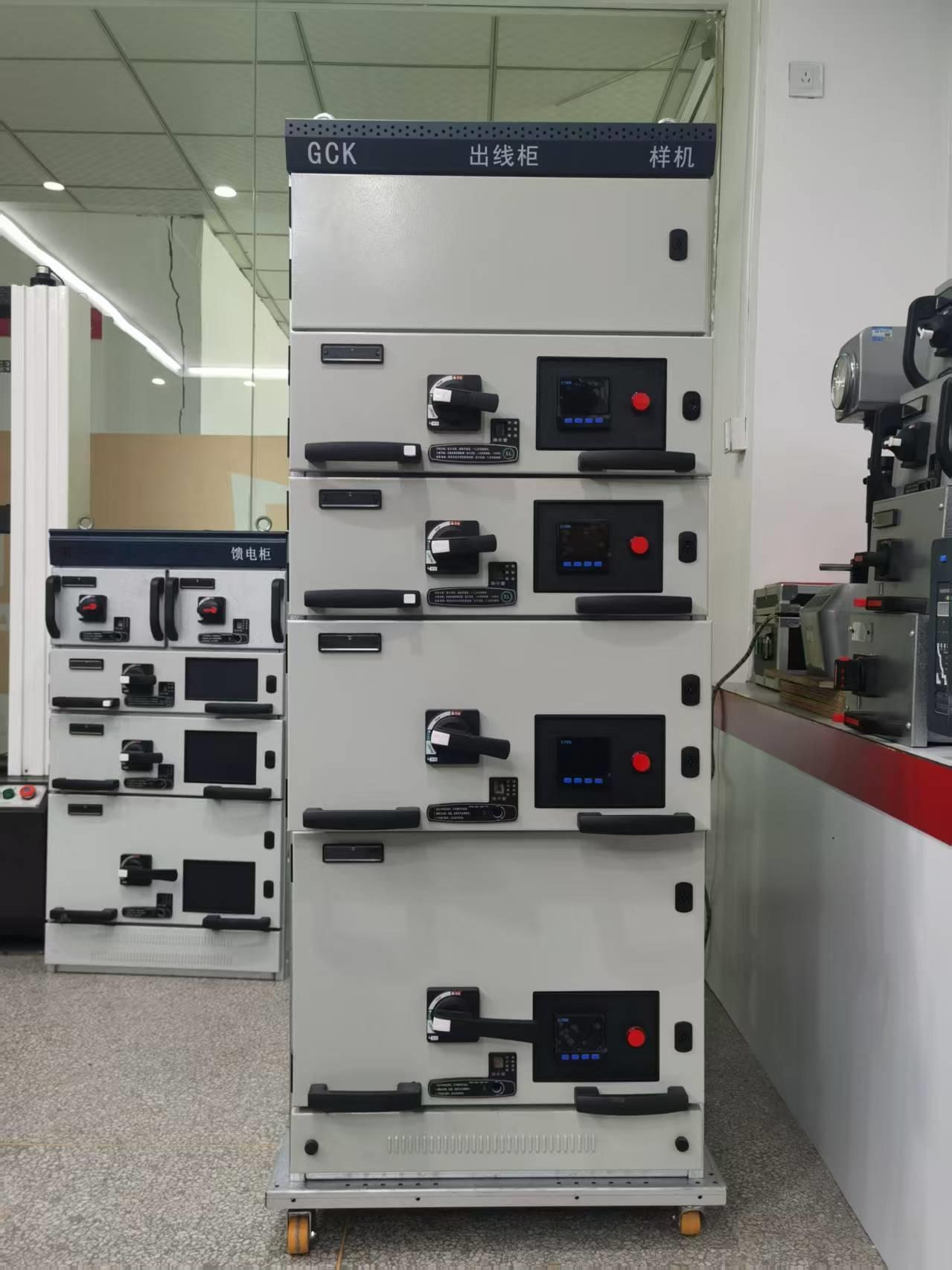
For years, adding a smart trip unit to a residential breaker panel meant paying a premium and often waiting weeks for a specialty order. Most electricians only recommended them for high-end custom homes or small commercial spaces where load monitoring justified the extra cost. Homeowners rarely asked for the feature by name, and many didn't know it existed until a breaker tripped unexpectedly and the diagnostic data proved invaluable.
That dynamic has shifted quietly but decisively. Major panel manufacturers now include basic smart trip functionality—such as overload pre-alarms, energy metering per branch, and local fault-code memory—as standard on their mid-range and even entry-level residential lines. The bill of materials for a current sensor and a low-power microcontroller has dropped so much that leaving them out no longer saves meaningful production cost. Meanwhile, code updates pushing arc-fault and ground-fault protection on nearly every circuit have made breaker electronics unavoidable, so adding a few extra sensing capabilities is a natural step.
The result is that homeowners buying a new panel today often get remote visibility and smarter tripping behavior without asking for it. Electricians still appreciate the diagnostic readouts after a nuisance trip, but the larger change is how ordinary households begin to treat the panel as a data hub rather than a dumb distribution box. What was once a niche upgrade is becoming the quiet baseline, and that shift will shape how future retrofits and energy-management systems get designed.
Type-Tested Assemblies Become the Price of Entry for Export Orders
For manufacturers eyeing overseas markets, shipping a product without a type-tested assembly is like showing up to a formal dinner in jeans—technically possible, but you won't get past the door. Buyers in Europe, North America, and increasingly in Middle Eastern and Asian industrial hubs now expect that switchgear, motor control centers, and power distribution boards have been put through standardized short-circuit and temperature-rise tests before they even ask for a quote. This isn't just about compliance paperwork; it's a trust signal that the equipment won't fail catastrophically when a fault occurs on the customer's floor.
The shift has been gradual but relentless. A decade ago, smaller export deals might slide through with manufacturer self-declarations or partial test data. Today, procurement teams in countries like Germany, the UAE, and Australia treat IEC 61439 or UL 1558 verification as a baseline filter. If the assembly hasn't been type-tested by an accredited lab, the bid often never reaches an engineer's desk. This has forced many mid-sized fabricators to either invest in their own test setups or partner with certified panel builders who can supply listed assemblies as sub-components.
What's interesting is how this requirement reshapes the competitive landscape. The cost of type-testing a single custom assembly can run into tens of thousands of dollars, which naturally pushes manufacturers toward modular, pre-tested designs that can be configured quickly without losing their certified status. Consequently, the price of entry isn't just about passing a test—it's about building an entire product range around repeatable, verified performance. Companies that treat type-testing as a one-off expense quickly fall behind those who see it as an ongoing engineering discipline.
How Data Center Buildouts Are Rewriting Design Assumptions
For years, data center design followed a fairly predictable recipe: raised floors, hot and cold aisles, and power densities that rarely crept above 8kW per rack. But the latest wave of buildouts has torn up that playbook. Hyperscale tenants and AI workloads are pushing racks to 20kW, 50kW, even 100kW, forcing architects to rethink everything from ceiling height to structural bracing. The old assumptions about airflow and cooling simply don't hold when a single cabinet starts behaving like a small furnace.
Cooling is where the shift is most visible. Traditional air-based systems choke under the new loads, so many teams are moving to direct-to-chip liquid cooling or rear-door heat exchangers as standard components rather than exotic add-ons. This, in turn, changes the plumbing, the pump rooms, and even the floor layout. You can no longer just drop in more CRAC units and call it a day. Designers now have to consider water quality, leak containment, and the sheer weight of coolant distribution networks when laying out a facility.
Site selection logic is being rewritten too. It used to be enough to find cheap land near a major fiber route and reliable grid power. Now the scarcest resources are construction speed, local transformer availability, and the ability to secure multiple gigawatts of power years in advance. Some developers are converting old warehouses or even shopping malls just to shave months off the timeline. Others are betting on microgrids and on-site generation, because waiting for the utility to upgrade a substation could mean losing a anchor tenant to a faster-moving competitor. The buildout boom isn't just scaling up old designs; it's forcing a completely different conversation about what a data center actually is.
Local Codes Meet Global Specs: A Balancing Act for Manufacturers
Every production line juggles two masters: the local rulebook and the global playbook. A factory in Ohio might follow state-level electrical codes while shipping to Europe, where IEC standards demand a different wiring philosophy. The friction isn't theoretical — it shows up in rework hours, dual inventory, and certification bottlenecks that quietly erode margins.
Smart manufacturers treat this tension as a design constraint, not an afterthought. They map regional requirements early, often during the prototyping phase, and build modular platforms that accept localized components without redesigning the core. That approach turns compliance from a final inspection headache into a parameter the engineering team can optimize.
The real balancing act comes when local codes conflict with global specs on safety margins or material choices. In those moments, the default isn't to simply pick the stricter rule — it's to understand why the rules diverge. A voltage tolerance difference might trace back to grid stability assumptions, not actual risk. Knowing that lets a manufacturer negotiate test waivers or design a single variant that satisfies both, instead of maintaining two separate SKUs and doubling the documentation burden.
Modular Construction Pushes Switchgear Toward Plug-and-Play
The shift toward modular switchgear is quietly erasing one of the most stubborn bottlenecks in electrical distribution: on-site assembly. Instead of wrestling with loose busbars, cable terminations, and protection relays in a cramped room, contractors now receive factory-tested blocks that snap or bolt together with standardized interfaces. This isn't just about saving a few hours—it changes how projects are scheduled, because the intellectual heavy lifting happens on the factory floor where quality control is consistent and repeatable.
What makes the plug-and-play label stick is the way internal connections have been simplified. Pre-wired compartments, draw-out breakers with self-aligning contacts, and communication buses that auto-configure mean a technician can often commission a lineup in a day rather than a week. Expanding an existing installation becomes less like surgery and more like adding a bookshelf: the new section arrives with its own frame, bus extensions, and wiring harness, designed to match what's already there.
FAQ
Demand is being pulled by a mix of data center construction, renewable energy integration, and the rapid rollout of EV charging stations. Older commercial buildings are also upgrading electrical distribution systems to meet stricter energy efficiency rules.
Local names like Chint, Delixi, and Liangxin hold a strong position in mid-range and cost-sensitive projects thanks to sprawling distribution networks and quicker after-sales response. International players such as Schneider Electric and ABB still lead in high-end intelligent switchgear, but the gap is narrowing as domestic R&D teams push out modular and connected products.
Real estate and infrastructure remain massive consumers, but the fastest growth now comes from data centers, solar farms, and industrial automation lines. Battery manufacturing plants have also become a notable source of orders in the last few years.
Compulsory CCC certification and compliance with GB standards are just the entry ticket. Many companies also pursue IEC or CE marks for export, which adds testing and documentation costs. For smaller workshops, keeping up with changing safety and electromagnetic compatibility rules can be a real burden.
It is substantive. Projects in data centers, hospitals, and high-end commercial towers increasingly request remote monitoring, fault prediction, and energy usage analytics built into switchgear. The extra cost is justified by reduced downtime and better load management, especially in cities with expensive peak electricity rates.
Copper and steel price swings squeeze margins, and overcapacity in the standard products segment forces many factories into price wars. At the same time, investing in digital features and skilled software engineers is expensive, which puts pressure on mid-sized firms that cannot easily pass costs to customers.
Exports to Southeast Asia, the Middle East, and parts of Africa are growing as local infrastructure spending rises. However, winning those orders requires navigating country-specific certifications and building service networks, so many exporters are shifting from pure OEM supply to branded offerings with local partners.
Manufacturing is heavily clustered in the Yangtze River Delta and Pearl River Delta, where component supply chains are dense. Wenzhou and Yueqing are known for high-volume, lower-cost products, while Shanghai and Suzhou tend to focus on more advanced, customized switchgear for premium projects.
Conclusion
Prefabricated low voltage switchgear has moved from niche to standard in China’s high-rise construction, as developers push for shorter on-site assembly windows and tighter spatial coordination. Domestic panel builders are likewise making smart trip units a default rather than an upsell, integrating protective relays with communication-ready metering that feeds building management systems. For export-oriented manufacturers, type-tested assemblies are no longer a differentiator but a threshold requirement; European and Southeast Asian buyers routinely reject designs without verified short-circuit withstand documentation. Data center buildouts have further rewritten assumptions, demanding higher fault ratings, smaller footprints, and redundant bus configurations that traditional switchgear rarely accommodated.
The tension between local GB codes and international IEC/UL specifications remains a balancing act. Manufacturers now maintain parallel product lines with modular internal layouts so the same enclosure can be reconfigured for domestic and overseas compliance without full retooling. Modular construction has reinforced this shift toward plug-and-play assemblies, where breakers, busbars, and communication gateways arrive prewired and factory-tested, cutting commissioning time on site. In aggregate, the sector is bifurcating into commodity panels for low-cost residential work and engineered assemblies for infrastructure, data halls, and export projects, with the latter commanding pricing power even amid broader price competition.
Contact Us
Contact Person: Hellen
Email: [email protected]
Tel/WhatsApp: 86-13634205622
Website: https://www.voltcabinet.com