China Aluminium Formwork Benefits for Modern Construction Efficiency
2026-10-27
Watching a high-rise climb a floor every four days isn't magic—it's a choice of formwork. GETO has been quietly proving how Chinese aluminium formwork turns that pace from exception to standard. But speed is only the first number that changes.
Lightweight Aluminum Panels Speed Up Site Work
Moving panels around a job site usually means waiting for a crane or burning extra labor hours, but lightweight aluminum changes that equation. A single worker can carry a full-size panel without strain, and two people can set an entire wall section in minutes instead of an afternoon. The reduced weight also means fewer trips back to the material stack, which keeps crews focused on assembly rather than logistics.
Because the panels are so easy to maneuver, layout adjustments happen on the fly. A misaligned opening gets fixed by sliding the panel over by hand, no heavy equipment needed. That kind of flexibility shortens the daily schedule in ways that don't show up on a Gantt chart but show up in faster turnover. Contractors find themselves finishing exterior skins before the next trade even arrives.
Aluminum's strength-to-weight ratio also cuts down on bracing and temporary supports. Panels stay flat during handling, so there's less time spent straightening, shimming, or reworking. Field crews get a product that behaves predictably, and project managers get a schedule that holds up as a result.
Precision-Cast Panels That Eliminate Rework
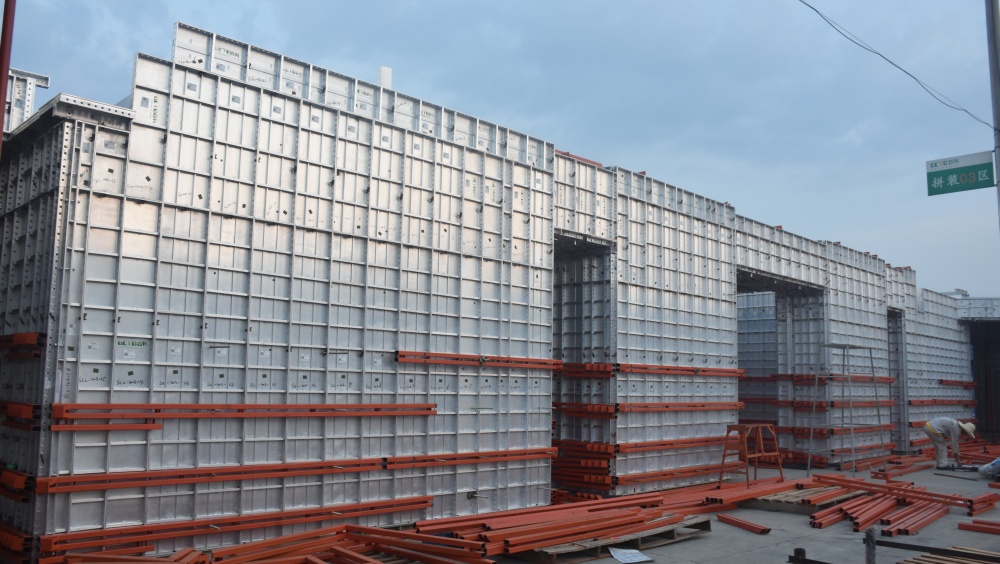
Every batch of precision-cast panels leaves the production floor with dimensions locked to the millimetre. Instead of trimming, shimming, or sending pieces back, installers find that each edge aligns the first time. That shift alone keeps schedules intact and removes the hidden labour hours usually spent correcting mismatched joints.
The casting process uses a controlled mix and stable moulds so surface consistency and flatness hold across the whole run. When panels arrive on site, the real test is speed: fixing clips, leveling lines, and sealing joints without re-cutting. Because the geometry repeats reliably, crews can move from one bay to the next without stopping for adjustments.
The result is a tighter envelope and fewer callbacks. By eliminating rework at the source, project managers see lower waste, less downtime, and a cleaner handover. It’s the difference between building around a product and letting the product fit the building as designed.
A Reusable System That Pays for Itself Quickly
Most teams waste money rebuilding the same foundations over and over. A reusable system flips that pattern by turning common processes, components, and workflows into shared assets. Once the initial setup is done, each new project taps into what already exists instead of starting from zero. The savings show up quickly because you stop paying for repeated design, testing, and debugging of identical pieces.
The payback period gets shorter when the system is built around modules that can be mixed, replaced, or updated without touching everything else. A small change in one area no longer triggers a chain reaction across the codebase. That lowers maintenance hours and keeps the team focused on new value rather than fixing old mistakes. Over a few months, the hours saved often exceed the upfront investment, and the system keeps working without additional licensing or per-use fees.
What makes this approach stand out is how naturally it handles change. When requirements shift, you adjust a single reusable block instead of rewriting entire features. Budgets become more predictable because you are not constantly allocating funds to rebuild the same logic. In practice, companies that adopt this model usually recover their setup costs within weeks or a few months, after which the system continues to reduce operating expenses year after year.
Shortening Project Timelines With Simple Assembly
Every extra step in an assembly process quietly eats away at delivery dates. One of the fastest ways to compress a schedule is to replace multi-part fittings with single, ready-to-use components that snap or lock into place. Instead of aligning three separate pieces, drilling alignment holes, and then tightening hardware, teams can install a unified module in seconds. This shift removes not only the physical labor but also the coordination delays that come from tracking and staging multiple parts.
Rethinking how parts arrive at the build station can shave days off a project without touching the engineering drawings. Pre-assembled subcomponents—like pre-wired panels or pre-mounted brackets—let crews skip the bench work that usually bottlenecks a line. When a single package contains everything needed for one section, there is no waiting on a missing fastener or a secondary operation. The result is a smoother hand-off between shifts and fewer pauses that force a schedule to slip.
Simple assembly also reduces the learning curve for new team members and temporary labor. If a connection only fits one way and requires one tool, mistakes drop fast. Fewer errors mean fewer rework loops, which are often the hidden culprit behind late handovers. By designing for ease at the point of installation, a project can hit its milestones with less overtime and fewer last-minute expedites, keeping the whole timeline tight without adding headcount.
Lowering Material Waste and Environmental Impact
Factories often treat material offcuts as unavoidable, but a closer look at cutting patterns and nesting strategies can reveal surprising room for improvement. By re-evaluating how sheets are laid out and adjusting tool paths, manufacturers can trim excess without slowing down production. Small shifts in batch sizes or order sequencing also help prevent over-purchasing of raw stock that ends up gathering dust or getting scrapped.
Rethinking packaging and protective layers offers another practical lever. Instead of defaulting to single-use wraps and foam, many teams find that returnable containers or minimal corrugated inserts work just as well for part protection. Sorting waste streams at the source rather than relying on a single dumpster makes it easier to recover high-value metals, plastics, and cardboard, turning what was once disposal cost into a small revenue line or at least a cleaner footprint.
Real gains come from tying material use to real demand. When production schedules are built from actual order forecasts rather than guesswork, less inventory sits idle and fewer finished goods become obsolete. Simple visual cues on the floor, like marked bins for offcuts or a board tracking weekly scrap weight, keep the goal visible and encourage operators to suggest their own reduction ideas. Over time, these habits lower both landfill contributions and the environmental toll of extracting virgin materials.
Flexible Formwork for Unconventional Building Shapes
Concrete has long been forced into rigid, orthogonal moulds, but flexible formwork flips that logic. A sheet of woven geotextile, a stretched membrane, or an air-filled bladder can be draped, bent, and gathered to produce curves that would be nearly impossible with timber or steel shutters. The result is a structural language of folds, bulges, and soft radii that feels almost organic, yet carries the full compressive strength of concrete once cured.
The practical appeal goes beyond aesthetics. Because the formwork adjusts to the pressure of wet concrete rather than resisting it with heavy bracing, it often uses a fraction of the material required by conventional systems. On small-scale experimental structures and full-size shells alike, builders can cast a double-curved vault with little more than a suspended fabric and a well-designed edge beam. The main difficulty is controlling the final geometry—every wrinkle and sag becomes permanent—so teams rely on physical mock-ups and careful tensioning rather than fixed dimensional drawings.
This approach suits projects where no two panels are identical: free-form pavilions, bespoke staircases, or facade elements that wave across a building’s face. Instead of producing dozens of unique moulds, a single flexible membrane can be reconfigured and reused, cutting waste and speeding up iteration. The trade-off is a higher demand for on-site skill and tolerance for variation, which often appeals to architects and fabricators who see imperfection as part of the material’s character.
FAQ
It arrives as a complete engineered set that can be assembled by trained crews in a fraction of the time needed for traditional timber or steel systems. Because the panels are lightweight yet rigid, they are easy to handle on upper floors without heavy crane time, and the high number of reuses means a single set can service dozens of identical floor plates.
The upfront investment may look higher, but the per-use cost drops sharply because one set can be reused hundreds of times with minimal refurbishment. Fewer skilled carpenters are needed on site, and the consistently accurate concrete finish removes or reduces the need for plastering, which trims both material and labour spending.
Panels are factory-machined to tight tolerances, so walls and slabs come out plumb and level with clean edges. This precision means follow-on trades such as tiling, cabinetry, and MEP installation can proceed without compensating for uneven surfaces, and many projects skip the wet plaster stage altogether.
Yes. A well-planned aluminium formwork cycle can complete an entire floor slab every four to six days, depending on the structure. Because the system is repetitive and quick to strike, it keeps other trades moving steadily behind the concrete works, which shortens the overall build schedule.
It aligns well with waste-reduction goals. The panels are reused across many floors and can be recycled at the end of their service life. In contrast to timber formwork, which often ends up as construction waste after limited reuse, aluminium formwork keeps site debris low and reduces demand for plywood.
The system works best when floor layouts are repeated or modular, because the initial engineering and fabrication are tied to specific dimensions. Early coordination with the formwork supplier is essential to integrate openings, service penetrations, and façade anchors, and any late design changes can be costly once the panels are produced.
Chinese manufacturers offer strong production capacity and can deliver fully customized formwork sets based on project drawings within a few weeks. Many suppliers provide detailed assembly drawings and on-site training support, which helps contractors adopt the system even if they have not used aluminium formwork before.
Conclusion
China's aluminium formwork systems are changing the pace and precision of modern construction. The lightweight nature of the panels means less dead weight on site, allowing crews to move, set, and strip forms faster than with traditional steel or timber. Because each panel is precision-cast to exact dimensions, build quality goes up while rework drops sharply. Contractors find the system pays for itself quickly through repeated uses, often returning its initial cost within a few projects. On top of that, simple wedge-and-pin assembly cuts training time and keeps project timelines short, even for crews new to the method.
Beyond speed and cost, aluminium formwork brings real environmental gains. Panels are reusable hundreds of times, which lowers material waste and reduces the need for plywood or disposable form liners. When a project calls for unusual shapes, the system adapts through custom corner pieces and adjustable panels, so architects and engineers don't have to compromise on design. This combination of durability, flexibility, and low waste makes China's aluminium formwork a practical choice for high-rise housing, commercial towers, and complex concrete structures alike.
Contact Us
Contact Person: Quanhui Nian
Email: [email protected]
Tel/WhatsApp: 8618070545691
Website: https://www.getoglobal.com/