Aluminum Alloy Antistatic Floor Manufacturer Guide to Durable Cleanroom Flooring
2026-09-27
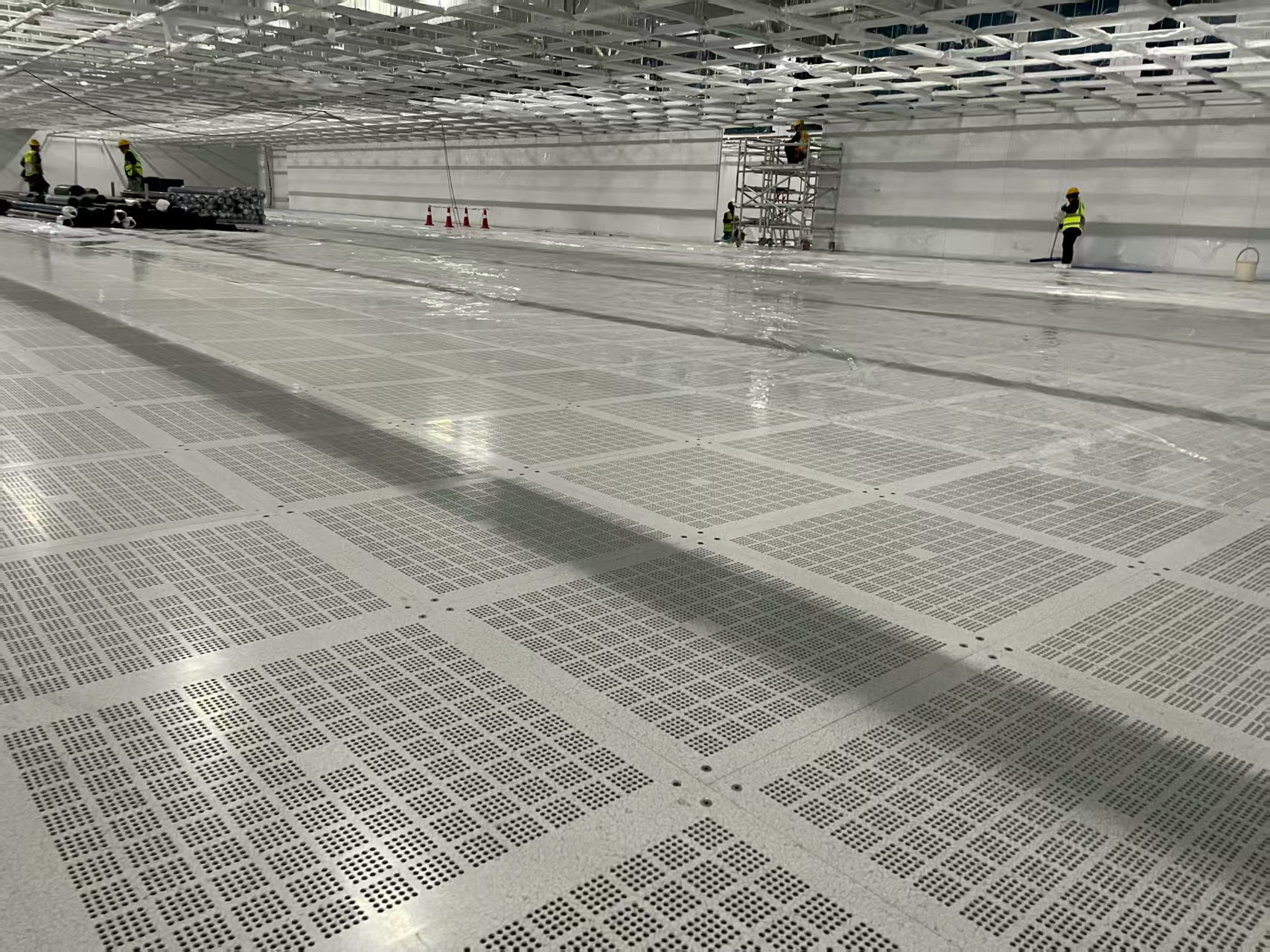
The first sign of a failing cleanroom floor is rarely a crack. It’s a static reading that keeps drifting out of range, or a panel edge that no longer sits flush. By then, the damage to your process may already be done. That’s why the choice of aluminum alloy antistatic flooring deserves more than a quick spec comparison. This guide from Lipin Floor walks through the material properties, grounding design, and durability factors that keep cleanroom flooring stable long after installation.
Where Aluminum Panels Earn Their Keep Over Steel
When weight is the quiet enemy of every mile, aluminum panels start to separate themselves from steel. On trailers, service bodies, and RV sidewalls, the math is straightforward: replacing steel with aluminum often cuts panel weight by nearly half while keeping dent resistance acceptable. That saved mass translates directly into larger payloads, easier manual handling during installation, and reduced strain on hinges and frames. It's less about raw strength and more about how far that strength goes per pound.
Corrosion is another place where aluminum earns its keep without constant babysitting. In coastal towns, road-salt regions, or any operation that rinses equipment with harsh chemicals, steel needs a flawless coating to survive—once that coating chips, rust moves in fast. Aluminum, by contrast, forms its own oxide skin the moment it's exposed to air. That thin layer heals itself after a scratch, meaning panels keep their appearance and structure with far less repainting or replacement over a decade of hard use.
There's also the matter of forming and heat. Aluminum's natural ductility lets fabricators bend deeper flanges, create tighter radii, and press more complex panel shapes without cracking the way heavier-gauge steel sometimes does. And because aluminum pulls heat away quickly, it shows up in tool boxes, battery enclosures, and electronic cabinets where temperature buildup can shorten component life. This combination of formability and thermal conductivity gives designers room to rethink panels as functional parts, not just flat cladding.
Decoding Load Ratings Before the First Pallet Rolls In
Every pallet that shows up at your dock carries a promise written in numbers most people skim past. That load rating isn't a suggestion or a legal footnote—it's the physical ceiling of what the packaging, the racking, and your forklift can safely handle before something bends, cracks, or collapses. Decoding it before the first pallet rolls in means reading beyond the sticker: checking the weight distribution, the dynamic load versus static load, and whether the pallet was built for single-use shipping or long-term rack storage. Miss that distinction and you'll be stacking a warehouse disaster one shrink-wrapped cube at a time.
Start with the weakest link, not the strongest number. A pallet rated for 2,500 pounds dynamic load might only hold 800 pounds on edge racking if the deck boards flex under point pressure. Look for imprint codes that reveal the wood species or plastic blend, because humidity and temperature quietly rewrite those ratings by 10 to 20 percent. Then cross-check the inbound manifest against the actual pallet footprint—forklift tines need at least six inches of clear entry, and an off-center load can halve the effective capacity without a single warning label changing.
Build a habit of treating load ratings like a pre-shift checklist item, not a post-accident explanation. Train receiving staff to flag any pallet where the rating is missing, illegible, or contradicted by visible damage like cracked stringers or warped decks. The goal isn't to reject every imperfect pallet but to map its true capacity before it disappears into a racking bay twenty feet up. That quiet minute of decoding at the dock edge is what keeps the whole operation from learning the hard way that gravity doesn't read fine print.
Surface Treatments That Quiet Foot Traffic and Capture Particles
Hard floors in busy corridors often turn every step into a sharp echo, but the right surface treatment can absorb that impact before it spreads. Dense carpet tiles with a low-profile loop pile are a classic choice—they muffle heel strikes and soften the overall sound profile of a room. For areas where carpet isn't practical, cork or rubber underlayments beneath vinyl or linoleum achieve a similar quieting effect without sacrificing cleanability.
Beyond noise, foot traffic stirs up fine dust, pollen, and other airborne debris. Entrance matting with a combination of scraper and wiper fibers traps up to 90% of incoming particles before they travel deeper into a building. Inside, micro-textured hard surfaces—like brushed concrete or etched stone—create enough friction to hold dust in place until it's swept or vacuumed, rather than letting it drift back into the breathing zone.
The most effective treatments pair acoustic damping with particle capture in a single system. For example, a cushioned vinyl plank with a textured wear layer reduces both footfall noise and the resuspension of settled dust. In high-traffic zones, combining a sound-absorbing underlayment with low-pile entry tiles creates a transition that quietly strips away debris before people reach quieter areas.
Seam Design Details Most Specification Sheets Skip
Many specification sheets treat seams as simple construction lines, but real garment quality hides in the details that rarely make it to paper. For instance, seam allowance width should not be constant across every edge—curved seams like armholes and necklines often need slightly reduced allowances to avoid puckering, while straight side seams can carry more. Fabric type shifts the ideal seam finish too: a French seam works beautifully on lightweight silk but adds unnecessary bulk to a wool coating. Without these distinctions, the sample room ends up making the same correction twice.
Topstitching callouts are another casualty of brief spec sheets. A single line reading edge stitch does not capture whether the stitch length should drop to 2.5 mm for a crisp collar edge or widen to 3.5 mm for relaxed denim. Understitching depth, thread weight, and needle size are equally absent—details that separate a professionally finished facing from one that rolls outward after washing. Even the direction of pressing a seam open versus to one side changes how the garment hangs, yet that instruction often lives only in the patternmaker's head.
Seam intersections and bulk management are almost never documented. A well-designed shoulder seam does not just join two pieces; it plans how the neckline seam, sleeve cap, and lining will nest at the same point without creating a lump. Grading seam allowances around a collar stand or clipping notches at a sharp curve are small moves with big visual impact, but they are left to experience rather than written into the spec. When these overlooked details are finally captured, the difference shows up in a smoother factory run and a garment that looks far more expensive than its parts suggest.
Testing Conductivity in the Field Without Expensive Gear
Most field conductivity checks don't require lab-grade meters. A basic digital multimeter, two stainless steel rods, and a known distance can give you a usable reading. Just push the rods into the soil or water sample at a fixed spacing, measure resistance, and take the reciprocal to get conductance. From there, divide by the cell constant—roughly the distance between rods divided by their submerged surface area—to estimate conductivity. It's not perfect, but it's enough to flag brackish water or saline soil.
For a quicker go/no-go test, wire a 9-volt battery to an LED and a pair of copper probes. In distilled water the LED stays dark; in mineral-rich water it glows. The brighter the glow, the more dissolved salts are carrying current. This method won't give you microsiemens, but it will tell you in seconds whether a water source is likely safe for irrigation or too salty for livestock.
Temperature matters more than most people expect. Conductivity shifts roughly two percent for every degree Celsius, so if you're comparing samples, warm them or cool them to the same temperature first, or keep a simple correction chart in your field notebook. Building your own probe from two stainless steel bolts set in epoxy and wired to a banana plug costs under ten dollars and lasts for years.
Cleaning Routines That Protect the Finish and the Static Path
Start each day with a dry microfiber pass, but don’t just push debris around—work from the far corner toward the exit in overlapping sweeps. This keeps grit from scratching the finish while preserving the contact points of the static path. Skip oil-based dust mops; they can leave a film that interferes with the floor’s ability to drain charge.
For weekly damp cleaning, use a pH-neutral cleaner diluted exactly as the manufacturer recommends, and wring the mop until it feels almost dry. Excess water can seep into seams and corrode the conductive strips that form the static path. Rinse with a separate mop and clean water, changing the bucket frequently so you’re not spreading a thin layer of soil back onto the finish.
Once a month, check the floor under bright, raking light. Look for dull patches, scuff marks, or areas where the finish seems thinner. Test the static path with an ohmmeter if your facility requires it, but at minimum, note any spots that feel tacky or rough. Address those early with a cleaner designed for the finish—not a solvent that could strip the protective layer.
FAQ
Aluminum alloy panels deliver a rare combination of rigidity, corrosion resistance, and consistent static dissipation. They stand up to repeated chemical cleaning without rusting or shedding particles, which keeps contamination risks low in sensitive production areas.
Reputable producers use precision die-casting and apply a tough surface treatment, such as epoxy or PVC coating, to resist scratches and impact. The panel edges are reinforced to handle rolling loads and frequent foot traffic without warping or losing conductivity.
Yes. The aluminum alloy core provides high load-bearing capacity, often exceeding 1,000 kg per square meter depending on the panel design. The conductive path remains stable under load because the static-dissipative layer is embedded rather than painted on, so equipment movement does not degrade performance.
Look for documented testing reports for surface resistivity, point load capacity, and flammability. A responsive manufacturer will also offer custom panel sizes, cutouts for air flow, and installation guidance. Field experience in cleanroom projects is a strong indicator of product reliability.
The raised system creates a plenum beneath the floor for controlled air return, which helps remove particles from the cleanroom more efficiently. Perforated or grated aluminum panels can be positioned exactly where laminar flow is needed, without compromising static protection.
Yes. Most manufacturers can produce panels in non-standard sizes, angled cutouts, or special shapes to fit around columns and equipment. Custom stringer systems and pedestal heights allow the floor to match specific cleanroom ceiling and utility layouts without extensive field cutting.
Routine maintenance involves damp mopping with cleanroom-compatible detergents and periodic resistance testing. Avoid wax or oil-based cleaners, as they can form an insulating film that breaks the static-dissipative path. Inspect pedestals and stringers regularly to maintain grounding continuity.
A dependable floor should meet ANSI/ESD S20.20 or IEC 61340 requirements for static control, and cleanroom compatibility often references ISO 14644 for particle emission. Ask the manufacturer for third-party certificates covering surface resistivity, load deflection, and fire rating before committing.
Conclusion
Aluminum alloy antistatic flooring brings a practical edge to cleanrooms where steel panels often struggle with weight, corrosion, and installation fatigue. The material is lighter and easier to handle, yet it still delivers the stiffness needed for rolling loads, provided you match the panel grade to the actual traffic. Before any pallet jack enters, understanding load ratings matters more than comparing raw material thickness: concentrated loads, point loads, and uniform loads each behave differently, and a panel that passes a uniform rating can still dent under a narrow wheel. Surface treatments do double duty here. A properly chosen coating or laminate can soften footfall noise and trap fine particles, keeping the cleanroom calmer between scheduled wipe-downs.
Seam design is where many specification sheets fall short. Tight, conductive joints prevent particle trapping and maintain the grounding path, but only if the underlying pedestal grid is leveled with care. Field verification of conductivity does not require a laboratory budget. A simple megohmmeter with two five-pound probes can confirm resistance to ground, and regular spot checks catch loose connections before they become static events. Cleaning routines should protect both the finish and the static path. Use pH-neutral cleaners and damp mopping rather than flood washing, and avoid waxes or insulating films that break the electrical continuity. With the right seam details, simple testing habits, and a cleaning schedule that respects the conductive surface, an aluminum alloy floor remains durable and reliable long after installation.
Contact Us
Contact Person: yuki
Email: [email protected]
Tel/WhatsApp: +86 18664390732
Website: https://www.lipinfloor.com/